Shabbat Va’Etkhanan: Your Life is a Prayer

Our parashah is called Va’Etkhanan, literally translated “I beseech.” Moshe is recounting to us how he begged G*d for the one thing he could not have: the ability to cross over the Jordan River with the People of Israel into the Promised Land. Moshe our leader was denied the satisfaction of crossing the finish line himself. Although he was allowed to see it from afar, G*d made it clear to him that he would not enter. 

This type of prayer, from the root kh.n.n, is familiar to us: we call those prayers Selikhot, and recite them every year at the time of Atonement. So it seems that our parashat hashavua acts for us as an early warning system. Yom Kippur is coming! From Shabbat Va’Etkhanan it is a bit less than eight weeks in the future.

There are many words for prayer in our sources. An ancient commentary on our parashah offers that 

“prayer is called by ten names: cry, howl, groan, song, encounter, stricture, prostration, judgment, and beseeching.” (Midrash Rabbah) 

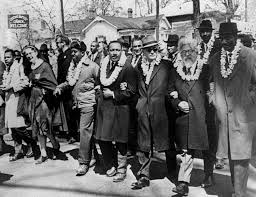
It can be startling to consider how many of our acts are actually a form of prayer. Now we can see why Rabbi Abraham Joshua Heschel said that when he marched with Dr. Martin Luther King Jr in Selma, he felt that his feet were praying. But which form of prayer did he mean? 

It would give us a pretty picture to contemplate if we consider that he meant “encounter” or even “song”; indeed, the famous photograph gives support for that reading. But as we in our community grapple with our responsibility as part of the White community of the United States of America, and keep tripping over our vulnerability as part of the Jewish community of the world, we may find ourselves more able to relate to more painful moments of prayer:

Stricture: we may feel confused, and constrained in our ability to act meaningfully.

Groan: more and more people tell me that they are no longer watching the news, for it is too painful.

Prostration: this is a posture of helplessness in the face of overwhelming anxiety.

Rabbi Heschel’s statement offers us a way to explore this idea further: it seems that the Jewish concept of prayer covers much human territory. More, it does so by offering context out of Jewish history, culture and ethics. To pray, for Jews, is sometimes to sit in meditation on the words and what they mean; but more often, it is to act in full awareness that by our acts we carry out the words and their meaning.

It can be a perfect circle: the words help us find meaning, and we instill meaning into the words by carrying them out.

So this is what Rabbi Heschel might have meant for us by his marching in Selma, and calling it prayer: each of us Jews becomes the best possible White citizen of the U.S. when we are empowered by the awareness that our lives are prayers, and when we know what that means, and can mean, for us.

We are now entering a time of focus upon beseeching G*d for clarity, for understanding and for mercy, preparatory to and part of the atonement process. May you find your own way into all ten expressions of Jewish prayer and may it empower you to see all your life as one great prayer, in every moment. There is much crying, much howling, that is a true expression of our day. May there also be much opportunity – made by our efforts – for song.

 images

Shabbat Hazon and erev Tisha B’Av: a Shabbat of Vision

This is a Shabbat of vision, and of the center falling apart. Although it would be easier, more poetic, to see a vision rising from destruction, life these days is not so lyrical. Rather, on this Shabbat, the last before Tisha B’Av, the vision we contemplate is of destruction, misery and death:

עַל מֶה תֻכּוּ עוֹד, תּוֹסִיפוּ סָרָה; כָּל-רֹאשׁ לָחֳלִי, וְכָל-לֵבָב דַּוָּי.

What blow will fall next, as more and more violence and corruption is unleashed in the land? If the nation were a body, the whole head would be sick, and the whole heart faint;

מִכַּף-רֶגֶל וְעַד-רֹאשׁ אֵין-בּוֹ מְתֹם, פֶּצַע וְחַבּוּרָה וּמַכָּה טְרִיָּה; לֹא-זֹרוּ וְלֹא חֻבָּשׁוּ, וְלֹא רֻכְּכָה בַּשָּׁמֶן.

From the sole of the foot even unto the head there is no soundness in it; but wounds, and bruises, and festering sores: they have not been treated, not bandaged nor soothed with medication.

אַרְצְכֶם שְׁמָמָה, עָרֵיכֶם שְׂרֻפוֹת אֵשׁ; אַדְמַתְכֶם, לְנֶגְדְּכֶם זָרִים אֹכְלִים אֹתָהּ, וּשְׁמָמָה, כְּמַהְפֵּכַת זָרִים.

Your country is desolate; your cities are burned with fire; strangers devour your land in your presence, and it is desolate, as overthrown by floods. (Isaiah 1.5-7)


On the heels of this Shabbat, on which we are meant to face the very real horrors of our society, the Jewish people moves into the fast day of Tisha B’Av. This date commemorates the destruction of the Jerusalem Temple by the Romans and the Exile of the Jewish people into statelessness wandering. On this date we remember what statelessness meant to us: the mass slaughter of pogroms, expulsions, and crusades, and the every day humiliations and persecutions of living in a society that did not recognize Jews as equals, or even as human.

Once upon a time not so many years ago I was told that Tisha B’Av is no longer relevant; it’s hard, after all, to feel the pain of past destruction when there is a State of Israel today, and, well, the weather is so nice. Who can relate when there’s a brilliant blue sky overhead?

The vision of this Shabbat Hazon answers: bring your eyes down from the blue sky to behold the earth beneath; listen to Isaiah; see that, although the Jews live in relative peace and safety, our task is to work for freedom for all. We must still hear the ancient words of the Torah, echoed through Pesakh Haggadah: proclaim liberty throughout the land for all its inhabitants (Lev.25.10) 

On this Tisha B’Av we gather not only to mourn what was, but also to learn from it: to ask how did we get here, and what shall we do now with what we know? We come together to remember who we are, to empower ourselves through our tradition’s wisdom, and to plan our shared path forward into action for racial justice. Because there are still those who experience slaughter, expulsions, and crusades, and the everyday humiliations and persecutions of living in a society that does not recognize them as equals, or even as human. Because “them” is us, and if we do not remember and act upon that truth, we will never turn away from Isaiah’s horrific vision of what is and toward the consolation of what might yet be.

How to think about engaging as a self-aware Jew in the 21st century, yet so much a part of all that has come before us, here today? As part of the learning and thinking we all must do, I invite you to consider this brilliant offering:

https://medium.com/@YotamMarom/toward-the-next-jewish-rebellion-bed5082c52fc#.35uv3ux8q

And remember that none of us is alone in this struggle. We are not only here to comfort each other, though: our shared strength is only blessed when we use it to do justice. Thus we summon the last utterance of the Prophet Isaiah: “Zion will be redeemed with justice, and they that return of her with righteousness.” (Isaiah 1.27).

Shabbat Matot-Masei: the Long, Confusing, Chaotic Road to Freedom

In this week’s double parashah we wind up the Book of BaMidbar. The word bamidbar, actually three in English, is usually translated “in the wilderness”. But the root word, dalet bet reysh, can as easily be understood as “speaking”. Our ancestors wandered across a land that was unsettled, and that they saw as chaotic and uncontrollable. We, similarly, wander in a wilderness of words. They come at us from so many directions, and so many sources: media, social media, neighbors, friends, family, community, books, and, of course, from the inside of our own heads. Uncontrollable, and often chaotic in their impact upon us.

In parashat Masei, “journeys”, the Torah recounts every stop our ancstors made on their trek from Egypt to the Land of Israel. Similarly, every community that shares a sense of common purpose may be lucky enough for its members to feel that they are going somewhere, toward some vision of a promise of an endpoint. And for every community, no doubt, the story that is told afterward makes sense of what may feel at the lived moment very much like trackless chaos. No doubt there were many days of confusion along the way, even though now the Torah simply lists each campsite, so calmly that it seems boring.

What were the Civil Rights days of the 1960s like? We look back now and see a narrative, or more than one, and it seems that people must have been so clear about their vision, so much so that one expects to actually see a path open up under their feet as they progress toward Equal Rights goals more visible now, even if not yet achieved. But what was that time really like? no doubt, there was chaos, and a sense of trackless wilderness. It is only afterward that we can see where we were, as we tell the story.

As we tell the story, we give it meaning by the way we tell it, with the perspective we gain from the struggle on the way, but only after it is over, and the dust has settled, as we can see again. Rabbi Nakhman of Bratslav taught that we, each of us, is a portrait that is finished only on our last day of life; only then do we see what we have created.

We don’t know the end of the story through which we are living now. We don’t know the meaning of the Jewish story of transition from the Rabbinic Era to whatever we’re entering now in our time. We can’t know the outcome of the Civil Rights Struggle of our day, or even the election cycle only a few months from now. And we are not privy to the Omniscient Narrator perspective on the Land and State of Israel. In all these cases, the final outcome is unknown, because we are still shaping the portrait through our choices.

We can only hope and pray to be as mindful and intentional as we can, with each other’s help, and to remember that each of our acts toward the good is needed. While we are wandering in a chaos of confusing and painful social change, which for many of us is accompanied by religious alienation and economic struggle, let’s try, as it is said in the Black struggle for Civil Rights, to keep our eyes on the Prize. And as Jews put it, to take care that each step carries us closer to the vision that we call Yerushalayim Shel Ma’alah, “the Ideal Jerusalem”. Keep kindness in your mind and your heart always.

We finish this book of the Torah the way we always do: with hazak, hazak, v’nithazek, “be strong, and of good courage, and let us strengthen each other”.

Shabbat Pinkhas: Our People’s Feminine Side

There is quite a surprise in our parashat hashavua, called Pinkhas. Our ancient Israelite religious narrative presents us with what we presume to be a Patriarchal framework for understanding our lives. Certainly, the caricatures of traditional Judaism (and, sadly, often the reality) diminishes and even calumniates the strengths and characteristics of the feminine. This has led to the political and social oppression of women in Jewish culture.

But how much of the ancient narrative is actually Patriarchal, and to what extent has it been taught through a lens which emphasizes the Patriarchal, while ignoring the evidence of strong women, and the presence of much feminine imagery? Books such as Merlin Stone’s When God Was A Woman or Raphael Patai’s The Hebrew Goddess trace a pre-Patriarchal world in which spirituality was equally male, female, and included other genders as well.

But what of the Torah? This is where parashat Pinkhas comes to surprise us. The Israelites have been journeying toward the Promised Land for nigh unto forty years at this point. To recap in a nutshell: our ancestors are led out of Egypt, brought to Mt Sinai, entered into a Covenant, given laws by which to frame their lives and thrive as free people, and are now pretty much settled into a routine. Pitch camp, feed the sheep, settle whatever differences are currently causing social upset, and then, at a propitious moment, strike camp and travel onward.

Then something happens that hasn’t been foreseen by the Giver of the Halakha, the path we are following. A man named Tzelafkhad dies. He had five daughters, no sons. And the rules for inheritance as the Israelites have them do not allow for that situation, for they specify that when a man dies, his son shall inherit him. Tzelafkhad’s daughters go to Moshe and ask the obvious question: if there is no son, shall not the daughter inherit? 

A wonderful thing happens: Moshe indicates that he does not know, and rather than try to work out the correct halakha on his own, he asks the women to wait while he goes to ask G*d. And then another wonderful thing happens: G*d tells Moshe that the women are right; they should inherit. And so the law stands to this day. Jewish law, challenged, expanded and changed by women. This is not a singular narrative; it beckons us to examine our inherited texts ourselves, rather than let another’s lens tell us what we see.

There is nothing particularly misogynistic about the story of Tzelakhad’s daughters, although the narrative, by assuming that fathers will have sons, is clearly Patriarchally biased. But there is hope for a bias, especially when one who carries it is willing to be enlightened, expanded, and changed through lived experience and learning – and, most of all, willing to hear questions and admit ignorance, just as Moshe Rabbenu, Moses our Teacher, did.

This week, our parashah acknowledges the strengths and gifts of the feminine side of life, even as Jewish mystics teach the essence of G*d as equally feminine and masculine – as are we ourselves. This week, the United States sees a woman nominated for President by a major political party and hails this new thing. But we know that  women as well as men have always been building human life, discerning the path, and summoning the future. It is only a matter of seeing, and lifting up the good that we see beyond the cultural expectations that we are supposed to have.

Shabbat Balak: Not Just a Funny Story

This week the Torah abruptly turns away from stories of Israelite society in terrifying disarray to what seems at first glance to be an absurd parable: a frightened king, a greedy hired mercenary, and a talking ass – and none of them are Jewish. Perhaps this week might offer some comic relief? Let the camera turn elsewhere, and the media pick up a different, feel-good story?

Not so much. When we look closer, and allow the parable to do its work of telling truth in disguise, layers of illumination unfold before us.

King Balak of Mo’ab sees a group of migrants encamped at the borders of the land in which the Moabites dwell. He worries that the Israelites and their herds of animals will consume the resources of his land. Determined to drive them off, he seeks out Bil’am, a locally famous seer. The plan is for Bil’am to curse the Israelite people; as the Midrash explains, “to kill them with words”.

Bil’am, offered riches for his work, accepts the mission and travels to the King. On his way, the donkey he is riding begins to act strangely, shrinking from forward movement, turning off the road to one side and then the other. Bil’am, seeing no reason for the donkey’s behavior, beats her, seeking to force her forward. Finally she lies down – and he beats her again.

This premise is strikingly familiar: the powerful leader, threatened by a group seen as foreign, hires a maker of words to vilify and so to destroy them. The mercenary who accepts the job harms not only the target group but everyone around, everyone associated with the word-making, everyone who reads and hears the words. And then there’s the donkey, the only one exhibiting any common sense:

Bil’am was riding upon his ass, and his two servants were with him. And the ass saw the Angel of the LORD standing in the way, with his sword drawn in his hand; and the ass turned into the field; and Bil’am struck the ass. Then the Angel stood in a hollow way between the vineyards, and the ass saw, and thrust herself unto the wall, and crushed Bil’am’s foot, and he struck her again. The Angel then stood in a narrow place, where was no way to turn. The ass saw the Angel, and she lay down under Bil’am; and Bil’am’s anger was kindled, and he struck the ass with his staff. 

G*d opened the mouth of the ass, and she said unto Bil’am: ‘What have I done to you, that you beat me these three times?’ 

Bil’am said to the ass: ‘Because you have make me a mockery; if only it was a sword instead I would have killed you.’ 

The ass said to Bil’am: ‘Am not I your ass, upon which you have ridden all your life long until this day? have I ever done anything like this before?’ He said: ‘Well, no.’ 

Then G*d opened the eyes of Bil’am, and he saw the Angel of the LORD standing in the way, with his sword drawn in his hand; and he bowed his head, and fell on his face.  (Numbers 22.23-31 excerpted)

The parable may be explained: 

The King is no one person, but rather those who allow, encourage, support, or simply stand by. Without them the curse-makers would have neither audience nor power. This week, once again, the King is those who support violence against those they define as Other.

The mercenary is no one person, but rather those who carry out the mandate of the King: those who carry out the violence. This week, they are those who beat up peaceful protestors, those who vote for hate, those who shoot. Like Bil’am, they, and we who are carried along with them, cannot see the catastrophic destruction that lies directly ahead in the path we are taking.

And the donkey, this week, is Charles Kinsey, a behavioral therapist in North Miami, who in the course of taking care of a patient with autism who had run away from a group home was shot while lying on the ground. Bil’am is so busy being embarrassed because his servants are laughing at his inability to control his ride that he does not even notice that the animal is suddenly expressing human sensibilities – moreso than any human in the story.

In the end, King Balak does not succeed. Bil’am attempts to create a curse on the Israelites, but it is turned into a beautiful song of praise, the Mah Tovu. And the donkey with common sense is justified, in the end, by G*d. The Israelites in their peaceful encampment on the steppes of Moab don’t even seem to know what’s going on.

Neither do we, and there is no respite today from horror either. We, who have no clear sense of how to turn a curse into a blessing, can only look around and wonder how we might learn to more closely listen to the voice of our own G*d given common sense – even if it seems to be awakened from an unlikely place. Even – perhaps especially – if it seems to be coming from that at which we are angry, or that of which we are afraid. The Other, after all, is a part of the All of which you and I are also, after all, a part. We have to realize what we don’t know, and calm down enough to seek out and listen to the human sensibility we need.

Shabbat Hukkat: Don’t Be Angry

The center is having a hard time holding. Moshe Rabbenu, “our Rabbi [read: teacher] Moshe” has already withstood the upheaval of the Golden Calf incident, the Korakh rebellion, and the catastrophe of the scout’s report only last week, the aftermath of which saw the generation of the wilderness doomed to die before reaching the Promised Land. 

This week, in the midst of a continuing stream of legislation coming from On High, he suffers the most personal, and perhaps, most significant blow. Not to his leadership, but to his heart: his big sister, Miriam, dies. She who watched over him when he floated in the bulrushes, she who adroitly managed the princess who found him so well that his own mother was hired to be his wet nurse; she who led the people in song and dance, feeding their souls as Moshe challenged their physical and mental readiness to leave slavery, over and over again.

The Israelite people, insensitive as we all are to another’s grief, start up again with the complaining. This time it’s about the water: the water is undrinkable. Once again, Moshe brings the people’s complaint before G*d; once again, G*d provides a remedy. And once again, Moshe is to duly carry it out.

But this time he snaps. Instead of doing what G*d has commanded, he – Moshe – the one who has stood between the people and G*d’s anger countless times, he, this time, breaks out in anger against his people. Commanded to speak to a rock in order to bring forth its water, he instead strikes it with his staff. Water flows, regardless – but nothing is ever again going to be the same.

Not for Moshe, who is doomed in his turn by G*d’s decree to die before reaching the Promised Land because he struck the rock.

Not for the people, caught in one more violent upheaval which they caused by their lack of ability, or perhaps it’s willingness, to learn.

And not for us, who read this parashat hashavua and will, once again, not be able, really, to change.

All this comes about because of anger. Anger causes Moshe to lose it; anger born of fear, of frustration and of confusion, closes the people’s ears; and we – we are no different than our ancestors. Still prey to overwhelming emotions, still to ready to be angry. 

The Sages teach that of all the emotions, anger is the most dangerous. This parashah gives us the paradigmatic example of its destructiveness. They taught: “Whoever tears garments in anger, breaks vessels in anger, and scatters money in anger, regard that person as an idolator” (BT Shabbat 105b), and “anger in a home is like a worm in a fruit.” (BT Sotah 3b) 

But is it not true that righteous anger is a virtue? Here Moshe, even in his fault, can teach us. From him we learn this week that anger which causes harm is not righteous. It is never ad hominem, focusing on the person rather than the problem; it never descends into self-righteousness; it lives alongside the mitzvot, rather than leading into transgression. It’s hard to find, in short.

This week has been no less shocking than last, and we must find a way to keep our center, and that of our community, strong, as a bulwark against the madness. We do so, ironically, by recognizing that our own small acts, here where we are, share the same world as Nice and Ankara, as Baton Rouge and Orlando and Minnesota, and wherever the next terror will arise. It’s all the same darkness, and we must continue to defy it by taking care of each other, by practicing kindness, and refusing to air our own angers – how petty they might seem in comparison! Anger is a natural response to stress, but it is one we must work to overcome, if we would do what little we can to work toward the redemption of this terrifying world.

We take care of each other by showing up for each other, not least by coming to shul or attending a minyan, but also by being present whenever we are with each other – even by email, even on the phone, and especially in person. Don’t be angry – be determined. Don’t be angry – take that energy and blast the love you have within you instead. Love will only conquer hate if it’s just as loud.

Shabbat Korakh: We Need Light Now

Things are going from bad to worse, worse that we thought they could get, in our parashat hashavua, called Korakh. Hundreds of Israelites, led by Korakh, rise up against the leadership. Hundreds of people die as a result, and – most horrifying – the situation at the end of the day is not fundamentally changed. We are still lost in the wilderness, still doomed to wander for a generation – and still angry.

These repeated cycles of rebellions put down, deaths of guilty and innocent alike, and growing discontent produces a certain demoralization for the survivors. And so we feel in these days, after a week of three shootings that we know about, three separate instances of gun violence that we know are connected. They are linked by our common sense that we are lost, and wandering through a wilderness of anger that grows with each tragedy.

“It produces a certain fatigue,” said Teressa Raiford, an organizer with Don’t Shoot Portland, on OPB’s Think Out Loud today. It makes you want to throw up your hands with a defeated sense of helplessness. And, more significantly, it makes one tend to move toward abandonment of the rest of the world for the sake of trying to keep one’s own loved ones safe. That way lies another generation of wandering, and we dare not take that road.

How did this happen? The Rabbis ask the same thing about Korakh’s rebellion. Perhaps considering the one will help shed light upon the other – and we need some light right now.

Korakh is Moshe’s cousin, a Levite just as thoroughly. He and the others who rebelled against Moshe’s leadership were passed over for positions of priestly authority. When G*d handed out the duties of the Levites, they were assigned chores of porterage, roles of singing Psalms, and, according to Divre HaYamim (the Book of Chronicles) the Korahites were also doorkeepers of the Mishkan, the holy space.

Korakh rebelled because, as he put it, “all the people are holy” (Numbers 16.3). He wasn’t wrong. So why does he die, along with those who rebelled with him? 

Some commentators find him arrogant: Korakh and those others with him should have accepted their lot in life. But I see his mistake as one of timing. Yes, all the people are holy, and his anger is genuine. But last week the Israelites experienced a terrible national trauma, and their ability to tolerate this uprising was seriously impaired. There could be no realistic attempt at rational discourse while they were still in the midst of mourning the loss of the Promised Land.

And so we are commanded by Jewish tradition: Do not try to console a mourner while her beloved dead is still before her.

Our United States society is plunged into mourning. We have lost, and are still losing, so much: our sense of safety, our trust in the public square’s security, our ability to see a way forward. We are doing terrible things to each other on a national scale. Even as the July sun, obscured by dark clouds, casts a gloomy darkness over us, the darkness of rising fear and anger and confusion is upon us. 

We have no clear answers for the healing of our society anytime soon, yet we cannot give in to helplessness or cynicism any more than we can rush to false conclusions. Yet our Jewish tradition offers us a powerful way to respond: light a candle.

Every erev Shabbat we are bidden to kindle the light of Shabbat at sundown. On this erev Shabbat, join me in lighting one extra: a light to shine against the darkness, a declaration that ner HaShem nishmat adam, “G*d sees by the light of the human soul” (Proverbs 20.27). Declare with me that every human soul increases the light of the world; every death brings darkness. Light an extra candle on this Shabbat in memory of a tragic death, among all those who are murdered by the violence in our midst.

And after Shabbat is over, and you have rested your soul, consider how you want to act. Because we must, if we would bring light to this darkness. This must be a summer of action for us: if not now, when? Here are three ideas to get you started:

*find out the Black-owned businesses near you, and choose them when you can

*sign up with SURJ (Stand Up For Racial Justice) and support them

*demand, agitate, and vote for gun safety laws

Shabbat Sh’lakh-L’kha: When the Safe Choice is a Dead End

This week in our parashah it all goes wrong, suddenly. Moses sends twelve scouts, each of them a leader of a tribe, to survey the land just ahead, the Land to which G*d promised to lead them. We are literally there already – until the Promised Land abruptly becomes a place to far to reach in one lifetime, it’s really not a long distance. The Israelites were standing on the threshold of the promise geographically, yet they discovered that they were not, spiritually, anywhere close.

What went wrong? The scouts return with two reports. Ten of these leaders of the people tell stories of large, fortified cities guarded by foreign giants; the Israelites seem justified in being shocked, and frightened. They paint a lurid picture of the dangers that lurk so close by. And all the while, two scouts keep on insisting that yes, it did seem scary, but it’s not as if we are unprepared, and, after all, G*d is with us.

Elected leaders of a people who use fear to rally people to their version of reality, while other leaders try to offer a reasonable voice that respects both sides. At its essence, there is no difference between this ancient story and our own day – immigration, gun safety, treatment of minorities among us, all these conversations are held hostage by fear mongering.

Panic ensues. Grumblings over the discomforts of the trail, which started last week, become louder, and the idea that someone threw out last week as an obviously absurd expression of disaffection – “let’s go back to Egypt” has actually become, this week, a plan that people are taking seriously.

No one really believes that so-and-so can become an elected leader, really…..

No one really thinks that the referendum can possibly go that way…

No one would really credit that we were better off before the Affordable Care Act….

Until it happens.

Fear has led them to rebel against the authority they elected to follow out of the hardships of slavery in Egypt. Not only the authority of Moshe and Aharon, but of the G*d they represent as well. Everything had seemed so settled and organized: the Ten Words that become a Covenant, the Mishkan built, the priests ordained and ready to go. But now the seeming stability is a crumbling facade. 

Back to Egypt? can anyone truly believe that this nonsense is the right path forward for our people?

Why do the Israelites give in to their fear? Is it only logical that they opted to believe the majority report? Neuroscience has established that “when the fear system of the brain is active, exploratory activity and risk-taking are turned off.” Even if the only way to survive is to take a risky leap, fear will keep most of us crouched in place. 

In our own lives we face choices that seem risky, of which we are afraid. We may seek a sort of majority report from modern scouts (aka anyone who we think knows more than we do), and if a number of studies align we may be persuaded of a truth. Yet we have come to know that another study will be published next year, or in another generation, or when the technology improves, and we will discover that, perhaps, the opposite is true. 

There are limits to what we can know based on evidence. Sometimes – especially when fear is a factor – the majority is wrong. Unfortunately, it is only after the irrevocable step has been taken that we can clearly see where we went wrong.

The Israelites knew immediately after that they had blown it. And while repentance may heal relationships, it does not repair consequences. The generation of slavery has forever missed its chance to enter the Promised Land by demonstrating that they are too afraid to take the necessary risks. 

What went wrong? The ancient Sages of our tradition found a hint in last week’s verse: “They traveled from the mountain of G*d” (Numbers 10.33). Rabbi Hanina explains: this teaches us that they turned aside from following G*d” (BT Shabbat 116a), and in the Middle Ages the scholar Nakhmanides adds: “they traveled away from Mt Sinai gleefully, like a child who runs away from school, saying, ‘Perhaps G*d will give us more commands [if we stay]!’” (Ramban to Numbers 10.35).

The Israelites gave in to fear because – if we allow anachronism in order to suggest relevance – they were not immersed deeply enough in their Torah learning and in their Jewish practices. Ignorance allows fear to take hold – and for Ramban, the first step that leads away from mitzvot ends in an avoidable catastrophe that some grownup thoughtfulness – the kind afforded by learning, and faith in the community’s vision – could have prevented.

May we keep ourselves far from fear, with each other’s help and support, and may we do what we can to allay our neighbors’ fear through doing justice with them and for them.

Shabbat Naso: Lift Every Face

I have been away, even away from media, on a month sabbatical to mark my twenty-fifth year as a Rabbi. This is my first opportunity to seek with you some sense of response to the tragedy that occurred in my hometown on Sunday.

That day was Shavuot, the spring Festival of the Harvest. We should have been delighting in our gardens and our farmer’s markets and the gift of green in spring in ways that are so Portland, and in the Jewish way too, gathering to chant the praises of Hallel and eating dairy and marking the gift of moral law given to our people on that day (the spring harvest Festival is also the day on which we remember hearing the Ten Words at Sinai).

Instead of having the luxury of taking a day to consider how we might focus ourselves more on our daily internal journey toward spiritual wholeness and community, using our Ten Words as a moral support, we are confronted with the horror of the moral failure of our society. And we devolve toward the same endless morass of media coverage, and the same awful words. Hate. Guns. Death.

Once again guns. Once again the craven moral failure of congressional leadership, using this tragedy, once again, for political interests, proving themselves unable to lead us anywhere except further into darkness.

Black Lives Matter has awakened us to the failure of our police to “protect and serve”. What might it take for the United States of America to confront the failure of our elected leadership to represent us? There are more guns than people in the U.S. now.

As a Rabbi, I do not seek to offer you a definitive answer as much as to help you find the ways in which Jewish tradition will lead you toward your own sense of your best moral response to evil. I do not say whether to respond; especially one the other side of Sinai, still with its looming shadow above us, moral response is an urgent requirement.

What are you, an individual, to do? Jewish tradition offers you clear moral guidance. First: no Jew is only an individual. We have the support of community with us. And second, that community’s ancient rituals have just offered us The Ten Words, our oldest moral code. They include these: do not murder.

* don’t let go of your anger at the swelling tide of evil our elected representatives allow by avoiding gun control legislation. They are guilty of aiding and abetting mass murder by their refusal to act. Use your anger; let it give you strength to bind up wounds as you can, offer your support to the grieving, and fight off the helplessness that you cannot allow to seduce you into believing that there is nothing you can do. Love, as much as you can.

* show up. Know that your presence and your voice must be used for a moral response or you are abdicating your responsibility. Those leaders who refuse to act must hear that we see them and we condemn them. Find a way to respond meaningfully: write a letter, send a donation, participate in a march or a vigil, and vote, every time, knowledgeably.

Finally – the media has told us that this is a hate crime against the LGBTQ community, and indeed, statistics show that for the first time, the number of hate crimes against that community has overtaken the number focused against Jews. The Pulse night club billed itself as a gay club. Politicians who refuse to recognize that are criminally avoiding their leadership responsibility.

But it is important to let Shabbat Naso remind us of something difficult to parse, and that is our shared humanity. When is it best to hold a group apart for sympathy, or for condemnation for that matter? When must we note our differences so that we can cherish them as our havdalah prayer teaches, and we must we assert that we are all the same, created in the Image of G*d, as our Judaism asserts?

The attack at Pulse was an attack on us all. It was an attack on certain individuals for certain characteristics but it was also an attack on us all. Gandhi once said “I am a Christian, I am a Jew, I am a Hindu, and so are you.”  Learning from that prophet, seeing where his words coincide with Jewish ethics, we can add a verse: 

I am gay, lesbian, trans, and bisexual; 

I am an immigrant Muslim; 

I am a cowardly congressman, 

and so are you.

Hate divides us. If love is to conquer all, it must reach all. Yes, vote the criminally irresponsible out, but don’t hate them. That is the yetzer hara’, the evil impulse, and when we hate those who hate we do nothing but continue to feed and strengthen that hatred.

The parashah this Shabbat is Naso, which refers to the method of taking a census used by the ancient Israelites: to count each one was to account for each one, expressed in the Hebrew idiom naso et rosh, “lift up the head”. We don’t count by bodies, but by lifting up each head to look each person in the face. 

When we do that, when we lift every face, we see the human in each one, even those with whom we cannot relate. When we all find a way to look into the eyes of each other in our world, only then will we find a way forward out of this horrible, horrible pit.

Naso et rosh, lift your head, and help others to do so as well. Help the grieving to look up toward the sun and its promise in this time of our spring festival; help the LGBTQ community to lift up in pride this Sunday; and may you feel the strength that you are offering echo back to you so that you, too, can find a way to look up, and around, and see G*d’s presence reflected in this still so broken and hurting world – a promise, just like spring, that the small bud of love will grow again and again.

Shabbat Emor: With All Your Heart

Nobody sees a flower really; 

it is so small. 

We haven’t time, 

and to see takes time – 

like to have a friend takes time.

  – Georgia O’Keefe

Parashat Emor begins with a series of commands regarding the priests and their behavior: lo y’tama’ b’amav, they shall “not become defiled among their people”. (Lev. 21.1) Priests, who are set up as an elite among the people, must live up to the expectations of the position. This is a very ancient idea and still so relevant: when people occupy positions of high authority, we expect them to behave accordingly, and by that we mean ethically – and we are especially disappointed in them when they do not.

There’s an ethical dilemma, though, in that expectation: we who are not in that high position might come to see our own behavior as less significant. We might even say that it’s no big deal if we break a law, compared to if the priest/king/president/mayor does. 

Jewish tradition teaches differently. When the Jerusalem Temple was destroyed by the Roman Empire, the Rabbis sought ways to keep our religious (which includes ethical) traditions relevant even without the institutions they had been based upon and grew from. Jewish teaching emphasizes that each of us can defile not only ourselves, but our people, when we act unethically. It takes the heart right out of the community and slowly but surely, that community declines into cynicism. 

No – rather than give up the institutions that support our acts and teachings, they brilliantly interpreted them:

No more sacrifices? the Rabbis taught that G*d welcomed the “service of the heart”, and that our obedience to the ethical teachings of our tradition would be just as acceptable an offering – as a gift of thanksgiving for the gift of life, or as an offering of atonement.

No more Temple altar? our tables in our homes shall become our altar, they said, and each of our homes a mikdash me’at, a “small sanctuary”. Our homes are to echo and reinforce our ethics.

No more priests? the Rabbis pointed out, G*d declares in the Torah that “you shall all be to me a kingdom of priests, and a holy people.” (Ex.19.6) Without a central Jewish institution, it was – and is – up to each of us to maintain the ethical standards that were to be upheld by the priests.

It is clear that we are to see the ethical commands of Judaism as incumbent upon us all equally. And these mitzvot are that which will keep us from becoming “defiled among the people”. But how to keep track of all the specifics in the way we are meant to behave, not only judging others but ourselves, in a life so full of distraction? How to, as the familiar mitzvah puts it, follow the path “with all your heart”?

The text of parashat Emor itself offers us a way to do just that: “you shall count off seven weeks. They must be complete” (Lev. 23.15) Jewish tradition has developed this into an ethic of counting our days – all our days, not just these 49 between Pesakh and Shavuot. But these 7 weeks have become for us a time to deepen whatever practice we have for noticing our days, for not letting them slip by completely unexamined. When we take time each day to consider our day, we see them, and the days themselves become fuller for us, richer – and we are more able to be conscious ethical actors in our lives, rather than helplessly pulled from place to place, commitment to commitment. 

Then we are more able to act with all the heart. And that is what makes each day, and each week, “complete” in the sense of the Torah’s phrase.