Rosh HaShanah 5783: Identity and Kehillah

I. Individuality: just another word for nothing left to lose

I’ve never done the Hineni prayer which is only for those who lead the prayers during the Days of Awe; it always seemed arrogant to hold myself apart from our community in that way. We all stand before Truth and Eternity equally. 

Yet it’s also true that I’m the rabbi and you’re not – and seriously, that role is precious to me. I feel the responsibility and try to bear it with care. It’s a significant and important part of my identity.

It’s identity I want to talk about with you tonight, and about who each of us is, we individual identities that are part of this community – to which we belong, which belongs to us, is made up of us, yet is also beyond any one of us….

First I want to invoke our context. Some of you have heard me talk about the Third Era of Jewish life. In a nutshell, this concept posits that the Jewish people have lived in two distinct eras already (the Biblical and the Rabbinic) and that we are now in transition to a Third Era. Because we are living through the transition, we cannot know what the Third Era will eventually look like for us; but the Jewish people is not disappearing by any means. We are in the process of re-birthing ourselves into a new world.

What distinguishes our dawning Third Era is a new idea: that of autonomy and individualism. The sense of oneself as self-determining is only a few hundred years old and only applies to the philosophy of human beings who lived within the context of a Western European society. It was the backlash against a controlling European Church and absolute monarchies that led to Kant asserting that each of us is actually, and must be, self-governing. 

If you think about it, it’s a bedrock assumption that many of us never question. The certainty that each of us determines our own life is as solid as the fact that the sun rises in the morning. Or that when I was growing up in Central Florida it would rain every day in the summertime at the same time, 4pm. There would be a downpour and then the sun would come out.

It doesn’t do that anymore. And, well, how self-determining are we, after all? How many aspects of your life feel beyond your control on the eve of this new Jewish year of 5783?

Physically and spiritually, we are not random particles buzzing about in the universe; we do live in patterns that are human. There’s a finer point here, and it’s about free will, our capacity for choice within the larger forces that do shape our fate and are beyond our power to change. 

We are part of structures within which we make choices. As one philosopher put it,

“One may learn from others one’s moral obligations, but only in the sense that a mathematician learns from other mathematicians.” I think this is a brilliant metaphor for how we live our lives: mathematicians don’t invent the axioms within which they work, they just apply them as they go where curiosity and imagination lead.

We may say it, we may even believe that “no one is the boss of me”, but we do so in the face of wildly contradictory evidence: “the boss of me” is often felt as by any one of us as a responsibility to a family, a job, or a community. So there’s a contradiction here.

And here’s our problem: as the self-determining individuals that we think we are, we are hundreds of years cut off from the community that could help us parse it meaningfully. 

In other words, I can’t figure myself out unless sooner or later I can turn to you to ask you if I’m making sense.

II. Attachment disorder

How does the individual find a way into belonging to meaningful community – to the end of being radically alone?

Here’s where Judaism has a real advantage: we literally pray heteronomy. (That’s not a gender term! It means the opposite of autonomy – i.e. commanded by something Other.) 

What we mean by this is that Jewish spiritual culture does not expect you to create your own identity and be your only guide; for us, you are supposed to get a study partner, find a teacher, and live in obligation to that which gave you life and keeps you alive. 

Judaism is, in other words, counter-culture to the modernity which is, nevertheless, reshaping it. Those of us who were raised in autonomy cannot easily become heteronomous, although it does happen. The rest of us wander, looking for a safe space to rest from the exhaustion of maintaining our selves, alone and disconnected. The self was not meant to carry its own weight.

This word heteronomous, the opposite of autonomous, is so Jewish an idea that if you look it up at the Merriam-Webster dictionary website, the first example is Jewish. The website presents a newspaper quote from a contemporary Jewish leader, Rabbi Avi Weiss, who states:

Torah m’Sinai is a form of heteronomous law, a structure of law that operates independent of any individual or group.” You can join it, but you can’t personalize it, since it exists beyond you. (It’s not “Sheila-ism” as academics of boomer sociology call the penchant of believing that one can be one’s own god, and pick and choose what rituals “work” for the individual.)

When you are seeking to belong that which is beyond you, how do you begin? When you are new to community, how do you catch the wave? I remember when a lovely and very thoughtful older woman was considering becoming a member of our congregational family. After meeting with me – more than once – to carefully consider the whole idea of belonging, she took the leap and joined up! And not long after she came back to me: “Rabbi, I’m a member now. How do I do it?”

This is where it’s appropriate to be an individual, and vitally important to have a sense of yourself within a group. In an intentional Jewish community, the entry is really in answering a simple question. 

To take the first step into belonging, you have to ask yourself: which mitzvah do you want to do? Because Jewish community is primarily about fulfilling the mitzvot that define a shul: beit midrash, a “place of study,” beit tefilah, a “place of prayer” and beit knesset, a place to come together, get caught up, share a meal.

It’s rather like a symphony, where each one of us is an instrument with our own personal sound. Once everyone is situated within their identity – your strength, and your interest – and learning how to move in harmony with everyone else, we make beautiful music together. Shir Tikvah means song, after all – song of hope.

The question of that harmony with others becomes key to finding our place. 

III. “Safe space” v “brave space” 

The ongoing challenge of the balance of self and other (the Jewish philosopher Emanuel Levinas: the Other commands me) why is is so hard for some of us to become part of the community? Why do some of us leave at the drop of a hat, as if it’s only about us and our comfort?

I’ve been thinking a lot about this and I have an idea I’d like to consider with you. What if community is the ultimate mirror of the individual, projected outward and reflected back atcha? What if that’s what can be so difficult about it? The balance of self and community is not just a myriad of other selves, the community becomes a sort of Self.

I’ve watched that reality play out in real time over the years at our shul. In 2002 15 people got together and mutually covenanted to create a new Jewish congregation in Portland. I was privileged to be invited to be their Rabbi.

When we began to grow and to respond to the challenges and opportunities of the early 21st century, some of our founders were surprised by the way the community was growing. Some were discomfited, fought against it, and then finally left. Others embraced the unexpected with delight, or at least with equanimity, and grew spiritually in ways they never would have expected.

What was the difference between them? 

We are taught that HaShem is present in Jewish spiritual community. It’s true that when we pray together, we affect each other in our shared experience in ways that do not happen when we are alone. 

But let’s push it a little farther, following the lead of the mystics, who always push for the next level of wondering:

If each of us reflects the image of the Holy as individuals, then our spiritual community must also be reflecting…something. Is it possible that our community also reflects back to us as a mirror does? And tells us something about ourselves, maybe sometimes something we’re not ready to accept?

In the construction of the mishkan in the wilderness, the Torah recounts that the women who served at the entrance to the Tent collectively used their mirrors for the creation of a large open vessel for water, in which we were to immerse hands and feet before entering the Holy place. Is there something about the reflection we saw in the water in which we immersed that was a necessary gaze into a mirror, into our soul? 

Perhaps it is sometimes difficult to be in community because it offers us a mirror into our selves, our individuality, that is not always easy to see.

When you’re alone you can become convinced of your path. Only when you’re immersed in community together with us can your spiritual identity be challenged, questioned, polished, enhanced, and supported.

Safe Space v Brave Space 

III.  In Jewish tradition, finding one’s place within community is an obligation if you are truly to live a meaningful life.

Thus “Voluntary” membership in a spiritual community is not a choice for one whose sense of identity is Jewish, but a vital act for supporting that identity.

I recently realized that my Fitbit is a really good analogy for what I’m trying to say here. I got a Fitbit to become familiar with my heart rate as a measurement of fitness. (Of course the first email I got was an invitation to join the Fitbit community.) And over time I saw that the daily use of the Fitbit becomes a structure that can hold a day together: how many steps now? How many now? Is the sense of satisfaction at the end of the day when you hit your goal because of that goal, or because there was an awareness you could carry with you all day long that knitted the disparate parts of your experiences together into one neat readout?

Here is how the novelist Howard Jacobson puts it:

Without obligation and repetition he was as chaff in the wind. If religion meant anything he could understand, it was this: doing again what had worked when you did it the last time, doing it because you believed you had to, remonstrating against the random, refusing to be tossed about the universe as though the universe had no use for you. That was the beginning and the end of religious devotion to him, anyway. Not what you owed to a god but what you owed to the idea that you weren’t arbitrary or accidental. And whatever you did more than three times a week, at the same time and with the same reverence, was another blow struck against the haphazard.

The regular practice of a mitzvah doesn’t just make you a good Jew; over time it carries the promise of helping you to become a coherent Self.

  1. The community within which you carry out your practice will benefit (Hevra Kadisha, Yad l’Yad, Tefilah, Tikkun Olam)
  1. you will find a new sense of strength to get through your days (if only because you’ll be distracted!).

I know a woman whose son was diagnosed with a chronic incurable disease. She is at her best when she’s working on helping someone else, or taking care of some problem; it gives her strength to be reminded that though she feels helpless to “fix” her son, she really can bring relief to other situations. One by one, each mitzvah builds a rock of stability. Holding on to it, we can best stay afloat in all the chaos of our lives.

A mitzvah is not a good deed, but it can make you a good person.

One mitzvah is not going to save the world, but one regular mitzvah can sustain you and, over time, become your Rock.

No mitzvah will stave off death, but any mitzvah can help you find meaning in every day of your life.

Shabbat Nitzavim: Who Is The Jewish Community?

כל ישראל ערבים זה בזה “All Israel are guarantors for each other” (Talmud Bavli, Shevuot 39a). 

But a person cannot serve as a guarantor unless they is more resourceful in some way than the one they are guaranteeing. For example, a poor person obviously would not be accepted as a guarantor for a rich person’s loan. So if the Talmud says that all Jews serve as guarantors to each other, this means that in every Jew there is a quality in which they are superior to all others.

– The Lubavitcher Rebbe

In the 1980s the Who Is A Jew controversy rocked the Israeli-American Jewish relationship. At its heart was a disagreement over gatekeeping; it should have been called Who Is A Rabbi? It was a struggle for the power of declaring who is in, and who is not, in the Jewish community. 

In other words, as our parashat hashavua, Nitzavim, puts it, who is included when we are told that we all “stand this day before HaShem” to enter into the Covenant of the Jewish people with each other and with this vision of holiness to which we are committed?

Rabbis officiate at identity rituals – brit milah, brit mitzvah, and conversion – and in the 1980s women were beginning to be admitted into progressive rabbinical schools. That made all progressive Rabbis suspect to the Israeli Orthodox establishment. The same anxiety was manifest when the first LGBTQ+ Rabbis were ordained.

This anxiety is understandable in a world in which identity and its attendant politics are a focus of much intensity, and we see it on all sides in our days. Interestingly enough, however, the ancient understanding of Jewish belonging was not defined in some “primitive” narrow way, but with a wide and surprisingly pragmatic embrace, as demonstrated in the first lines of the parashah (Deut 29.9-14):

אַתֶּ֨ם נִצָּבִ֤ים הַיּוֹם֙ כֻּלְּכֶ֔ם לִפְנֵ֖י ה’ אֱלֹהֵיכֶ֑ם רָאשֵׁיכֶ֣ם שִׁבְטֵיכֶ֗ם זִקְנֵיכֶם֙ וְשֹׁ֣טְרֵיכֶ֔ם כֹּ֖ל אִ֥ישׁ יִשְׂרָאֵֽל׃

You stand this day, all of you, before your G*d ‘ה – your tribal heads, your elders, and your officials, every person in Israel

טַפְּכֶ֣ם נְשֵׁיכֶ֔ם וְגֵ֣רְךָ֔ אֲשֶׁ֖ר בְּקֶ֣רֶב מַחֲנֶ֑יךָ מֵחֹטֵ֣ב עֵצֶ֔יךָ עַ֖ד שֹׁאֵ֥ב מֵימֶֽיךָ׃

You, your children, your spouses, and the stranger within your camp, from woodchopper to water-drawer

In the first two verses we are told that class, gender, age and financial status are immaterial; we all are seen as equal before that which is Eternal. Note that the “stranger within the camp” – a term which is used to indicate the person who seeks to join the Jewish people through conversion in rabbinical Judaism – is included.

לְעׇבְרְךָ֗ בִּבְרִ֛ית ה’ אֱלֹהֶ֖יךָ וּבְאָלָת֑וֹ אֲשֶׁר֙ ה’ אֱלֹהֶ֔יךָ כֹּרֵ֥ת עִמְּךָ֖ הַיּֽוֹם׃

  • to enter into the covenant of your G*d ‘ה, which your God ‘ה is concluding with you this day,

לְמַ֣עַן הָקִֽים־אֹתְךָ֩ הַיּ֨וֹם ׀ ל֜וֹ לְעָ֗ם וְה֤וּא יִֽהְיֶה־לְּךָ֙ לֵֽאלֹהִ֔ים כַּאֲשֶׁ֖ר דִּבֶּר־לָ֑ךְ וְכַאֲשֶׁ֤ר נִשְׁבַּע֙ לַאֲבֹתֶ֔יךָ לְאַבְרָהָ֥ם לְיִצְחָ֖ק וּֽלְיַעֲקֹֽב׃

in order to establish you this day as G*d’s people and in order to be your G*d, as promised you and as sworn to your ancestors Abraham, Isaac, and Jacob.

The entire community enters the Covenant relationship with HaShem, and all, regardless of entry point, are seen as descendants of the ancestors, equally inheriting their status.

וְלֹ֥א אִתְּכֶ֖ם לְבַדְּכֶ֑ם אָנֹכִ֗י כֹּרֵת֙ אֶת־הַבְּרִ֣ית הַזֹּ֔את וְאֶת־הָאָלָ֖ה הַזֹּֽאת׃

I make this covenant, with its sanctions, not with you alone,

כִּי֩ אֶת־אֲשֶׁ֨ר יֶשְׁנ֜וֹ פֹּ֗ה עִמָּ֙נוּ֙ עֹמֵ֣ד הַיּ֔וֹם לִפְנֵ֖י ה’ אֱלֹהֵ֑ינוּ וְאֵ֨ת אֲשֶׁ֥ר אֵינֶ֛נּוּ פֹּ֖ה עִמָּ֥נוּ הַיּֽוֹם׃

but both with those who are standing here with us this day before our G*d ‘ה and with those who are not with us here this day.

Most interesting of all, perhaps, is that the commitment that the people are making on the day that they enter this Covenant agreement is binding upon their descendants, all the way down to us. 

This clearly shows that all those who had made it this far, who were still holding hands and making their way across the wilderness together, were equally invested in, and affirmed by, the Covenant relationship. And that we trusted it, and each other, enough to commit to passing it along to future generations.

That Covenant has been understood, from that day to this, as a mutual reliance: not only between HaShem and the Jewish people, but also between Jews; not only between Jews who know each other and share a congregation, a community, or a state, but also all those who came before us, and all who will, please G*d, come after us.

“This day,” in the first verse refers to Rosh HaShanah, according to the Baal Shem Tov. May all of us in the dawn of the New Year of 5783 find our place within our Jewish community strengthened and affirmed, through our own acts with each other, and for the covenant we keep with those to come.

Shabbat Ki Tavo: I wish this was over

בַּבֹּ֤קֶר תֹּאמַר֙ מִֽי־יִתֵּ֣ן עֶ֔רֶב וּבָעֶ֥רֶב תֹּאמַ֖ר מִֽי־יִתֵּ֣ן בֹּ֑קֶר מִפַּ֤חַד לְבָֽבְךָ֙ אֲשֶׁ֣ר תִּפְחָ֔ד וּמִמַּרְאֵ֥ה עֵינֶ֖יךָ אֲשֶׁ֥ר תִּרְאֶֽה׃ In the morning you shall say, “If only it were evening!” and in the evening you shall say, “If only it were morning!”—because of what your heart shall dread and your eyes shall see (Deuteronomy 28.67)

Our parashat hashavua is a painful one; Ki Tavo is full of horrifying warnings of what will happen to us if we, as a community made up of individuals with free will, do not live in accordance with the mitzvot. 

וְהָיָ֗ה אִם־לֹ֤א תִשְׁמַע֙ בְּקוֹל֙ יְהֹוָ֣ה אֱלֹהֶ֔יךָ לִשְׁמֹ֤ר לַעֲשׂוֹת֙ אֶת־כׇּל־מִצְוֺתָ֣יו וְחֻקֹּתָ֔יו אֲשֶׁ֛ר אָנֹכִ֥י מְצַוְּךָ֖ הַיּ֑וֹם וּבָ֧אוּ עָלֶ֛יךָ כׇּל־הַקְּלָל֥וֹת הָאֵ֖לֶּה וְהִשִּׂיגֽוּךָ׃

But if you do not obey your God יהוה to observe faithfully all the commandments and laws which I enjoin upon you this day, all these curses shall come upon you and take effect (Devarim 28.15)

This idea can be “dumbed down” into the vision of a cruel puppet master, but for those who are capable of seeing a deeper truth in the command to “observe faithfully.” All it takes is one look at these lines from the Shema:

הִשָּֽׁמְר֣וּלָכֶ֔םפֶּ֥ןיִפְתֶּ֖הלְבַבְכֶ֑םוְסַרְתֶּ֗םוַעֲבַדְתֶּם֙אֱלֹהִ֣יםאֲחֵרִ֔יםוְהִשְׁתַּחֲוִיתֶ֖םלָהֶֽם׃

Take care not to be lured away to serve other gods and bow to them.

וְעָצַ֤ראֶת־הַשָּׁמַ֙יִם֙וְלֹֽא־יִהְיֶ֣המָטָ֔רוְהָ֣אֲדָמָ֔הלֹ֥אתִתֵּ֖ןאֶת־יְבוּלָ֑הּוַאֲבַדְתֶּ֣םמְהֵרָ֗המֵעַל֙הָאָ֣רֶץהַטֹּבָ֔האֲשֶׁ֥רהנֹתֵ֥ןלָכֶֽם׃

The skies will be shut up so that there will be no rain and the ground will not yield its produce; and you will soon perish from the good land that ‘ה is assigning to you. (Deut 11.16-17)

What are the “other gods”? They are not the wooden idols that Isaiah speaks of derisively; they are real gods, those of fame and fortune, of power and of greed. In short, all the gods that are worshipped today by too many people. As a result, this warning has come to pass in our day:

וְהָי֣וּ חַיֶּ֔יךָ תְּלֻאִ֥ים לְךָ֖ מִנֶּ֑גֶד וּפָֽחַדְתָּ֙ לַ֣יְלָה וְיוֹמָ֔ם וְלֹ֥א תַאֲמִ֖ין בְּחַיֶּֽיךָ׃

The life you face shall be precarious; you shall be in terror, night and day, with no assurance of survival (Devarim 28.66)

The skies are shut up when there is supposed to be rain! And the “other gods” that are worshipped, the gods of capitalism gone awry and rewarding the greatest greed rather than the greatest love, are still being followed. And the results are terrifying; the sins of humanity and Mother Earth’s pain are written in the daily news.

The parashah comes every year to warn us and to frighten us. This year may it move us all to climate justice action. And let us do so within the supportive context of our Jewish community, still reminding us that there is also joy, and the need to give thanks, within us all, even now.

Shabbat Re’eh: Get It?

וְכׇל־הָעָם֩ רֹאִ֨ים אֶת־הַקּוֹלֹ֜ת וְאֶת־הַלַּפִּידִ֗ם וְאֵת֙ ק֣וֹל הַשֹּׁפָ֔ר וְאֶת־הָהָ֖ר עָשֵׁ֑ן וַיַּ֤רְא הָעָם֙ וַיָּנֻ֔עוּ וַיַּֽעַמְד֖וּ מֵֽרָחֹֽק

All the people saw the thunder and lightning, the call of the shofar, and the mountain smoking; and when the people saw it, they fell back and stood at a distance.

(Shemot 20.15)

On this Shabbat we enter into the month of Elul, so the Shabbat itself is not only named for the parashat hashavua (Torah reading of the week) but also the holiday of the new month: Rosh Hodesh. Once upon a time the new month was a significant holy day; for example, in the ancient story of Saul and David, a Rosh Hodesh holiday meal at the king’s table is the setting for high drama (see I Samuel 20 for the fascinating details). 

The parashah is named Re’eh, and it begins with a simple, unadorned summons: “see.” It is meant figuratively; we are being urged to think, to consider, to try to understand. 

רְאֵ֗ה אָנֹכִ֛י נֹתֵ֥ן לִפְנֵיכֶ֖ם הַיּ֑וֹם בְּרָכָ֖ה וּקְלָלָֽה

See, I set before you this day blessing and curse (Devarim 11.26)

Jewish tradition tends to focus upon hearing as the primary sense; this is logical for a people so ancient that we begin our story before the written word came to prominence. Then, information shared was embodied: a messenger carried a story, a witness testified to an event. Communication came from me to you and from you to me, and any written text that the messenger carried was only an aide memoire. And so of course we as a people are urged to shema, to listen, and to heed. 

Halakhah, the Jewish guide for our spiritual path, developed a formal social understanding of the importance of hearing, reflected in the fact that those who cannot hear could not testify in a judicial process. No other sense is so central in this way, possibly because those who cannot see are not significantly disadvantaged in an oral culture. In ancient Aramaic, the idiom for “blind” is sagei nahora, “full of light.” 

What happened to make us so much more dependent upon the written word, disembodied as it is? When did we start trusting what we see more than what we hear? How did we start saying “it is written, therefore it is true”? Is it possible that what we truly need to learn to “see” is that no one human sense is self-sufficient? Perhaps this is the founding wisdom of the halakhic ruling that no one witness is enough to convict: an individual cannot even witness against oneself without a second – i.e. in Jewish law you cannot “turn yourself in”.

Interestingly enough, the story of receiving the Torah at Sinai describes an experience of synesthesia, in which neural pathways are opened to multiple senses. In this case, we saw the sound of the shofar. It’s significant that no individual human sense could “make sense” of the theophany; it underscores the communal nature of the experience. We stand before Eternity together, and when one of us finds that one’s vision too overwhelmed, as a supportive spiritual community we can hold hands until sight returns.

During this month of Elul which begins on this Shabbat, may you answer the call to see figuratively: may you behold, and consider, and taste, and hear, and come to recognize the real depths and promise of the gift of your life. Soon the Shofar will sound, and you will be urged to see.

Shabbat Ekev (delayed post): Shamor and Zakhor – You are not HaShem

שָׁמוֹר וְזָכוֹר בְּדִבּוּר אֶחָד הִשְׁמִיעָנוּ אֵל הַמְּיֻחָד

“Keep” and “remember” in one utterance / we were caused to hear by the G*d that unifies (erev Shabbat song Lekha Dodi)

We are making our way through the gorgeous rhetoric of the book Devarim, whose name in English (from Ecclesiastical Greek via Late Latin) sums up its purpose: Deuteronomy, “second law.” It is presented as the final speech of Moshe Rabbenu, reminding us of all the years we journeyed the wilderness together, and all we learned. 

It has long preoccupied scholars of the holy texts that they sometimes contradict each other. For example, in this week’s parashah we find the following statement as Moshe reminisces:

בָּעֵ֨ת הַהִ֜וא אָמַ֧ר ה’ אֵלַ֗י פְּסׇל־לְךָ֞ שְׁנֵֽי־לוּחֹ֤ת אֲבָנִים֙ כָּרִ֣אשֹׁנִ֔ים וַעֲלֵ֥ה אֵלַ֖י הָהָ֑רָה וְעָשִׂ֥יתָ לְּךָ֖ אֲר֥וֹן עֵֽץ׃

Thereupon HaShem said to me, “Carve out two tablets of stone like the first, and come up to Me on the mountain; and make an ark of wood.” (Devarim 10.1)

This statement seems to directly contradict the account in Exodus in which it is clearly stated that the artist Bezalel makes the Ark, which is made of wood but also overlaid with gold. The

great medieval commentator Rashi relies on the explanation offered by the Rabbis of the Talmud, that this was not the Ark that Bezalel made (see Exodus 25.11) but rather another Ark, apparently made by Moshe himself.

Devarim contains other, even more difficult conflicts for those who expect our sacred text to be a perfect book. Perhaps the most famous example is the fact that Devarim contains a second version of the Aseret HaDibrot, the Ten Words. The wording for Shabbat differs from the version in Shemot, Exodus.

In Exodus 20.8:

זָכ֛וֹר֩ אֶת־י֥֨וֹם הַשַּׁבָּ֖֜ת לְקַדְּשֽׁ֗וֹ

Zakhor, “Remember” the Shabbat and keep it holy. 

…and compare Deuteronomy 5.12:

שָׁמ֣֛וֹר אֶת־י֥וֹם֩ הַשַׁבָּ֖֨ת לְקַדְּשׁ֑֜וֹ כַּאֲשֶׁ֥ר צִוְּךָ֖֣ ׀ ה’ אֱלֹ-יךָ

Shamor “Observe” the Shabbat and keep it holy, as your G*d HaShem has commanded you.

So which is it? Zakhor or Shamor? This ancient theological difficulty leads to a wonderful insight, for it allows us to remind ourselves that G*d talk is not our talk. The Rabbis insist that every word of Torah has seventy possible meanings. What you see as a contradiction is only shedding light on two possible meanings. You may not be able to say two things at once, but for sure HaShem can! And so the most famous erev Shabbat song, Lekha Dodi, has its most famous line:

שָׁמוֹר וְזָכוֹר בְּדִבּוּר אֶחָד הִשְׁמִיעָנוּ אֵל הַמְּיֻחָד

“Keep” and “remember” in one utterance

We were caused to hear by the G*d that unifies

It’s a delightful contradiction: the Holy Presence that unifies us allows us to discern difference in the single utterance that otherwise we might assume is meant to erase the differences. The erasure of difference is not the work of the Holy One of the Rainbow. “Keep” and “remember” are both right. Or as the old Jewish joke goes, when the Rabbi is confronted by two disputants and says “you’re right, and you’re right” and an onlooker says “Rabbi, how can they possibly both be right?” The Rabbi responds “and you’re right!”

For further frustration for those who want one clear text: There Was Never One Bible

Shabbat Nakhamu: Finding Consolation

Even as it is necessary to make space in our lives to grieve, so it is necessary to make space to feel joy. Our parashat hashavua, called Va’Etkhanan after a word specific enough to help us find our place in the unmarked wilderness of letters which is a Torah scroll, sets up the tension.

וָאֶתְחַנַּ֖ן אֶל־ה’ בָּעֵ֥ת הַהִ֖וא לֵאמֹֽר׃

I pleaded with ‘ה at that time (Devarim 3.23)

Moshe is disconsolate, begging HaShem to reconsider his upcoming date with death so that he can at least see the goal of 40 years of wandering; he has brought our people all the way to the edge of the Promise, all he wants to do is see it. This is truly a moment to grieve for all that Moshe will not be able to see, and be part of, in a future he did more than anyone else to help bring about. 

There is no answer for his suffering, nor for ours as a people and as individuals. Of course Moshe “deserves” to get there. But life is more mysterious than that. A level of emotional maturity which expects fairness to of life is childish. Growing up, we learn that joy and sadness are always mixed. There will always be grief.

But today, Erev Shabbat, is also Tu B’Av, a day which in our past was dedicated to joy:

אָמַר רַבָּן שִׁמְעוֹן בֶּן גַּמְלִיאֵל, לֹא הָיוּ יָמִים טוֹבִים לְיִשְׂרָאֵל כַּחֲמִשָּׁה עָשָׂר בְּאָב וּכְיוֹם הַכִּפּוּרִים, שֶׁבָּהֶן בְּנוֹת יְרוּשָׁלַיִם יוֹצְאוֹת בִּכְלֵי לָבָן שְׁאוּלִין, שֶׁלֹּא לְבַיֵּשׁ אֶת מִי שֶׁאֵין לוֹ. וּבְנוֹת יְרוּשָׁלַיִם יוֹצְאוֹת וְחוֹלוֹת בַּכְּרָמִים.

Rabban Shimon ben Gamliel said: There were no days as joyous for the Jewish people as Tu b’Av and Yom Kippur, as on them the daughters of Jerusalem would go out in white clothes, which each young woman borrowed from another. Why were they borrowed? They did this so as not to embarrass one who did not have her own white garments. And the daughters of Jerusalem would go out and dance in the vineyards – Mishnah Taanit 4:8

Putting aside the astonishment you may be feeling at this moment over the complete metamorphosis of Yom Kippur once the Rabbis got their collective hands on it, it’s interesting to consider the absolute opposites we are offered by our cultural calendar within one week. 

The harvest time, the miracle of gathering what we’ve sowed and the attendant sensual joy, is perennial; every year of our lives, we are invited to celebrate the gift of life, its tastes and experiences.

Yet:

The grief of death, and the collective death we mourned on Tisha B’Av only six days ago, is also part of the life experiences that we reap. Our rabbinic tradition speaks clearly to this sense that we are caught between polar opposites:

שֶׁעַל כָּרְחֲךָ אַתָּה נוֹצָר, וְעַל כָּרְחֲךָ אַתָּה נוֹלָד, וְעַל כָּרְחֲךָ אַתָּה חַי, וְעַל כָּרְחֲךָ אַתָּה מֵת, וְעַל כָּרְחֲךָ אַתָּה עָתִיד לִתֵּן דִּין וְחֶשְׁבּוֹן

for against your will were you formed, 

against your will were you born, 

against your will you live, 

against your will you will die, 

and against your will you will give an account and reckoning. – Pirke Avot 4.22

In other words, none of it is under our control, and we will never know why. Life is not fair; life is life. We are left to navigate as best we can between life and death, every day. On this Shabbat, may you open your heart to the joy that is the gift of your life, and may it fill you utterly, up to the brim, with peace.

Shabbat Hazon: Making Room to Mourn, Because the World is Broken

Those who mourn with Jerusalem will be privileged to celebrate with her – Ta’anit 30b

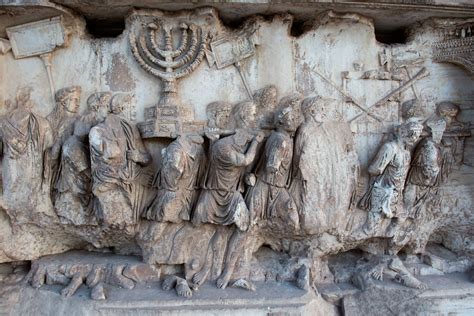
The Roman Arch of Titus clearly shows the soldiers returning from the sack of Jerusalem carrying the gold utensils of the Temple as spoils

This Shabbat is Tisha B’Av, the 9th day of the month of Av. Because it falls on Shabbat, we will observe Tisha B’Av on Sunday 10 Av, rather than tomorrow which is the 9th of the month (and Tisha B’Av means nothing more than “the 9th of Av”), because Shabbat takes precedence over all other observances.

Tisha B’Av is a fast day very different in character from Yom Kippur, when we fast to act out our desire to rise above the human impulses that make us easy prey for our yetzer Hara’, our evil impulse. The fast of Tisha b’Av is a fast of grief, and for all that is lost.

Our mourning as a people is observed for all those who died because they are part of our people: from the destruction of our ancestral home in Jerusalem by the Babylonian Empire in 586 BCE and again by the Roman Empire in 70 CE, to those who lost their homes and their lives in the Crusades, the Expulsion from Spain, the Kishinev Pogrom and so horribly many more….

In all our powerless years we could only mourn. There are those who suggest that since the re-establishment of the Jewish homeland, we no longer need Tisha B’Av. But like all the rest of our holy days, it is still possible to see that it has a place in our hearts. First, in order to continue to commemorate and mourn all those lives lost to us, and second, to make room for our own mourning over the true reason for the day, and why it has never, alas, lost its relevance.

The enduring lesson of Tisha b’Av is that, despite our wonderful capacity for love and joy, we human beings too often bring about our own destruction. As a people, the Rabbis of the Talmud taught, we begin to destroy ourselves when we allow the feelings of others to be less important than our own. They call it sin’at hinam“baseless hatred.” 

Tisha B’Av, the Ninth of Av, allows us to feel the sorrow of our collective human callousness toward each other and what it has wrought. Judaism sees the destruction of Jerusalem as a symbol of the prophet Jeremiah’s ancient warning, which still rings too true in all of the cities and towns where we dwell:

בִּכְנָפַ֙יִךְ֙ נִמְצְא֔וּ דַּ֛ם נַפְשׁ֥וֹת אֶבְיוֹנִ֖ים נְקִיִּ֑ים

on your garments is found the lifeblood of the innocent poor (Jeremiah 2.34)

שׁוֹטְט֞וּ בְּחוּצ֣וֹת יְרוּשָׁלַ֗͏ִם וּרְאוּ־נָ֤א וּדְעוּ֙ וּבַקְשׁ֣וּ בִרְחוֹבוֹתֶ֔יהָ אִם־תִּמְצְא֣וּ אִ֔ישׁ אִם־יֵ֛שׁ עֹשֶׂ֥ה מִשְׁפָּ֖ט מְבַקֵּ֣שׁ אֱמוּנָ֑ה

Roam the streets of Jerusalem, search its squares, look about and take note: You will not find a single person who acts justly, who seeks integrity (Jeremiah 5.1)

We’re only human, and when we’re overwhelmed with the enormity of the world’s suffering, in which we participate, we must find room and time to mourn. We Jews and those who travel with us undertake this mourning that we need in community ritual, and thus support each other through it. 

It’s a necessary balancing act. If we cannot see that there is cause to mourn, we will not be able to experience it, and thus to move through it, and, then, we hope, with eyes newly opened, to seek the blessing that we might wrest from it.

There’s an old saying that those who mourn with Jerusalem will be blessed to celebrate with her as well. Whether it is the earthly Jerusalem so in need of healing on both sides of the West Bank separation wall, or the mythical Jerusalem that stands for all our hearts yearn for, may we who have so many reasons to mourn live to see the time of celebration hashta b’agla uvizman kariv, speedily and in our days, amen.

Shabbat Matot-Masei: Rosh Hodesh Av

It’s not the actual act of violence; it’s the conditions that cause it.

Conditions that we either contribute to,

or have the power to interrupt,

with each small act of our own everyday lives. 

found unattributed on this website: YGB

Today is Rosh Hodesh Av 5782. On the Jewish spiritual calendar, today is the first day of the month of Av, and the first of Nine Days of mourning. Even as when the month of Adar begins we spend 15 days getting ready for Purim with the mitzvah of focusing upon what makes us joyful, this month we are given 9 days to meditate upon what makes us grieve.

The Jewish people focuses a good amount of our communal grief upon the question “how could this have happened?” It is significant to note that our spiritual tradition does not teach vengeance, but looks inward: how did we not see this coming? Did we ourselves have a part in allowing this to occur? Were we blind to something?

The Babylonian Talmud preserves an ancient explanation for the disaster of the destruction of Jerusalem in the following famous account of Kamtza and bar Kamtza. It reads, in part:

Jerusalem was destroyed on account of Kamtza and bar Kamtza. This is how it was: 

There was a certain man whose friend was named Kamtza and whose enemy was named bar Kamtza. He once made a large feast and said to his servant: Go bring me my friend Kamtza. The servant went and mistakenly brought him his enemy bar Kamtza.

אֲתָא אַשְׁכְּחֵיהּ דַּהֲוָה יָתֵיב אֲמַר לֵיהּ מִכְּדֵי הָהוּא גַּבְרָא בְּעֵל דְּבָבֵאּ דְּהָהוּא גַּבְרָא הוּא מַאי בָּעֵית הָכָא קוּם פּוֹק אֲמַר לֵיהּ הוֹאִיל וַאֲתַאי שִׁבְקַן וְיָהֵיבְנָא לָךְ דְּמֵי מָה דְּאָכֵילְנָא וְשָׁתֵינָא

The man who was hosting the feast came and found bar Kamtza sitting at the feast. The host said to bar Kamtza. you are my enemy. What then do you want here? Arise and leave. Bar Kamtza said to him: Since I have already come, let me stay and I will give you money for whatever I eat and drink. Just do not embarrass me by sending me out.

אֲמַר לֵיהּ לָא אֲמַר לֵיהּ יָהֵיבְנָא לָךְ דְּמֵי פַּלְגָא דִּסְעוֹדְתָּיךְ אֲמַר לֵיהּ לָא אֲמַר לֵיהּ יָהֵיבְנָא לָךְ דְּמֵי כּוּלַּהּ סְעוֹדְתָּיךְ אֲמַר לֵיהּ לָא נַקְטֵיהּ בִּידֵיהּ וְאוֹקְמֵיהּ וְאַפְּקֵיהּ

The host said to him: No, you must leave. Bar Kamtza said to him: I will give you money for half of the feast; just do not send me away. The host said to him: No, you must leave. Bar Kamtza then said to him: I will give you money for the entire feast; just let me stay. The host said to him: No, you must leave. Finally, the host took bar Kamtza by his hand, stood him up, and took him out.

אָמַר הוֹאִיל וַהֲווֹ יָתְבִי רַבָּנַן וְלָא מַחוֹ בֵּיהּ שְׁמַע מִינַּהּ קָא נִיחָא לְהוּ אֵיזִיל אֵיכוֹל בְּהוּ קוּרְצָא בֵּי מַלְכָּא אֲזַל אֲמַר לֵיהּ לְקֵיסָר מְרַדוּ בָּךְ יְהוּדָאֵי אֲמַר לֵיהּ מִי יֵימַר אֲמַר לֵיהּ שַׁדַּר לְהוּ קוּרְבָּנָא חָזֵית אִי מַקְרְבִין לֵיהּ

After having been cast out from the feast, bar Kamtza said to himself: Since the Sages were sitting there and did not protest the actions of the host, although they saw how he humiliated me, learn from it that they were content with what he did. I will therefore go and inform against them to the king. He went and said to the emperor: The Jews have rebelled against you.

There are several candidates for the sin that caused the destruction of Jerusalem: callousness, hypocrisy, hate. But Rabbi Yohanan blames excessive humility above all, because it leads to inaction. as it does in the continuation of the story when Rabbi Zeharya ben Avkolas cautions against doing anything to divert the violence, from suspicions to rebellion to massacre, because the message might be misunderstood.

Excessive humility is a favorite disguise of the Evil Impulse, we are taught: it will tell you that you can’t make a difference, there’s too much, you’re too small. Or it will tell you you’re too burned out. But we, each one of us, is a spark of the great Oneness, and our every small move does matter, like the butterfly’s wing of a small kindness.

Between Kamtza and bar Kamtza there is yet hope that someone might choose to act to interpose peace. Every day we can choose not to add to the climate of callousness with one small act. In these Nine Days we mourn together for those choices not taken. May we find consolation together in the days to come.

Shabbat Pinhas: Violence Begins At Home

Arch of Titus in Rome depicting Roman soldiers carrying away the Jerusalem Temple’s menorah and other sacred objects after the destruction of the Second Temple on 2 August 70 CE / 9 Av 3830

מִפְּנֵי מָה חָרַב? מִפְּנֵי שֶׁהָיְתָה בּוֹ שִׂנְאַת חִנָּם

“why was the Second Temple destroyed? It was destroyed due to the fact that there was sin’at hinam, senseless hatred, among us” – BT Yoma 9.a

This week in the Torah our parashah is profoundly disturbing. Last week’s final lines described what our tradition has defined as an “extrajudicial execution” undertaken by a member of the priestly caste, Pinhas. He took it upon himself to kill an Israelite and a Midianite who were acting in a way that undermined the integrity of the Israelite community at its very heart – the mishkan, the holy Place.

If this religiously-inspired double murder wasn’t difficult enough, the beginning of our parashat hashavua records the approval of HaShem.

פִּֽינְחָ֨ס* בֶּן־אֶלְעָזָ֜ר בֶּן־אַהֲרֹ֣ן הַכֹּהֵ֗ן הֵשִׁ֤יב אֶת־חֲמָתִי֙ מֵעַ֣ל בְּנֵֽי־יִשְׂרָאֵ֔ל בְּקַנְא֥וֹ אֶת־קִנְאָתִ֖י בְּתוֹכָ֑ם 

וְלֹא־כִלִּ֥יתִי אֶת־בְּנֵֽי־יִשְׂרָאֵ֖ל בְּקִנְאָתִֽי׃

Pinhas, son of Eleazar son of Aaron the priest, has turned back My wrath from the Israelites by displaying among them his passion for Me, 

so that I did not wipe out the Israelite people in My passion. (BaMidbar 25.12)

Jewish discussion around what seems to us in our day to be a highly problematic text has led to justifications, apologetics, and a fair amount of alienation. Interestingly, though, the medieval commentators – Rashi and Ibn Ezra for two – have no problem at all with the passage. 

Each generation and its perspective. Rashi’s teacher suffered the loss of three sons murdered in the People’s Crusade, which killed 12,000 Jews. Ibn Ezra lived in Al Andalus amid the persecution of the Jews by the Almoravid and Almohad dynasties.

And we, what are we to make of Pinhas, we who have seen the damage that killers can do when they justify their behavior by their religion?

Earlier modern generations have turned their faces away. We, however, live in a time of escalating violence of word and deed. What are we to derive from this Torah narrative, we who do not choose to look away?

First, we must make room to mourn that this is our reality. We lock our doors; we fear for our children; we are impatient and angry and stressed with each other and ourselves.

Second, we must resolved not to become inured to it. We must never stop repeating to ourselves This too is Torah and I need to learn it.

It’s significant that parashat Pinhas occurs during the Three Weeks of mourning for the destruction of the Jerusalem Temple and Jewish life in Israel, which we observe at the culmination of this period, on Tisha B’Av. Rabbis who lived through the destruction and the aftermath taught that the destruction of Jewish life in Israel came about not through the violence of the Romans but due to sin’at hinam, “senseless hatred” of one human being for another in our own community.

In other words, it’s not the actual act of violence; it’s the conditions that cause it. Conditions that we either contribute to, or interrupt, with each small act of our own everyday lives. 

More on this next week, with the famous story of Kamtza and bar Kamtza. May your observance of this Shabbat be an oasis that brings you moments of shalom – peace and wholeness. And may you believe in your power, small though it be, to interrupt violence in all the small and compassionate ways we know by heart.

Shabbat Balak: We’re Alone Out Here

We are usually distracted enough by the talking ass in our parashat hashavua to fail to notice some of the other more sobering moments of the story of the mercenary prophet Balaam and King Balak of Moab. The very idea of a talking animal might lead us to miss the fact that she is the only reasonable voice in the narrative, and that hers is the voice of the usually unheard. In this way she is a harbinger of much more: her rider’s ears are closed to his true mission, and the king’s to the way fear makes him imagine danger.

The People of Israel, a group of refugees making their way from terror toward the dream of safety, appear on the lands of the King of Moab, who immediately seeks to secure his border and repel the needy travelers. (This story may be the justification for the Israelite meaning given to the Moabite name, which literally connotes “misbegotten bastard.”) 

Then as now, it often seems that any stranger appearing on our doorstep brings with them not human need we might meet, but danger.

This week a damaged car appeared at the curb of the Commons; inside, a couple who had already lost their home and, now, their only place of safety. We had two options: to ignore them and call the police, or to go over, say hello, and see if we could help. I’m proud of us that we did the latter, and that our membership is deep and wide enough with expertise and compassion to find an elderly couple an emergency hotel room voucher and a sheltered place where they can stay together.

The Israelites were not welcomed when they showed up at King Balak’s doorstep. The way we tell the story, our innocence saved us, and when the prophet Balaam who was hired to curse us opened his mouth, blessing came out instead. The blessing was the divine voice cutting through the human fear; for us, it’s any small gesture that can overcome our apprehension and establish humanity between us and those who seem unlike us. And any of us might manifest that ability to turn a curse into a blessing on any given day, if we can find it within us to listen to the voice of reason, even when at first it seems to be coming from too unlikely a place to credit – like a talking donkey.

It’s possible, though, to see a more complicated story here. Balaam’s most famous words in this parashah are 

מַה־טֹּ֥בוּ אֹהָלֶ֖יךָ יַעֲקֹ֑ב מִשְׁכְּנֹתֶ֖יךָ יִשְׂרָאֵֽל

How fair are your tents, O Jacob,

Your dwellings, O Israel! (BaMidbar 24.5)

Which we like to repeat endlessly – indeed, they are the first words we are to recite in the liturgy when we enter a prayer space. But the Midianite prophet also proclaims

הֶן־עָם֙ לְבָדָ֣ד יִשְׁכֹּ֔ן וּבַגּוֹיִ֖ם לֹ֥א יִתְחַשָּֽׁב

There is a people that dwells apart,

Not reckoned among the nations (BaMidbar 23.9)

For two thousand years these words have proved to be a curse with power far beyond King Balak’s dreams. Whether wandering through other nation’s territory with no expectation of rights or safety, or re-establishing a state in our ancient home which fits neither in Europe nor Asia or Africa (see the U.N.’s international groupings), or the reality that even in the most enlightened and compassionate circles of society we are most often erased from social justice narratives, Jews are a people who are not reckoned among the nations. 

Who are these Jews? Certainly King Balak didn’t care to get to know us. He stopped at fear and imagined danger. We know better, but we can’t seem to get the message across. Small and large antisemitic words and acts surround us even in those who seem to be our comrades and friends. What’s a Jew to do?

Only what we have always done, and as the haftarah reminds us this Shabbat: 

הִגִּ֥יד לְךָ֛ אָדָ֖ם מַה־טּ֑וֹב וּמָֽה־ה’ דּוֹרֵ֣שׁ מִמְּךָ֗ כִּ֣י אִם־עֲשׂ֤וֹת מִשְׁפָּט֙ וְאַ֣הֲבַת חֶ֔סֶד וְהַצְנֵ֥עַ לֶ֖כֶת עִם־אֱלֹ-יךָ        

O human being, you have been told what is good,

And what is required of you:

Do justice

love goodness,

And walk modestly with that which you worship.

(Micha 6.8)

Only one thing silences the hostile voices of those who will never allow us peace, and that is to stay focused on why we exist. Respond to hate by stoking the inner fire of your love for all that is holy in your life: Keep listening for the voice of the holy: focus on the kindness that is in your hands to do, and the justice that is in your power to demand. And let modesty walk with you, reminding you that it is not up to you to heal the world, just to keep your eye on what your ability allows.