Shabbat BaMidbar: Fire, Water and Wilderness

The name of our parashah this week is the same as the name of the Book we are now beginning, once again, to study: BaMidbar, “in the wilderness,” the Book called Numbers in English. So far in our journey from Egypt toward that which is Promised, our Torah has recounted for us the escape itself, the arrival at Mt Sinai, the building of the Mikdash, the sacred space, and the details of how we are to approach the Presence of G*d, in that space and, for that matter, everywhere else. From the arrival at Sinai, all the action has taken place at the foot of that mountain. Now, “on the first day of the second month, in the second year after they came out of Egypt” (Num.1.1), we are preparing to leave Sinai, and to strike off across the untracked wilderness.

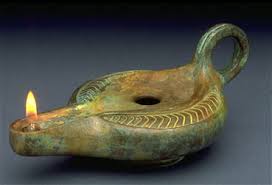
This parashah is always read just before Shavuot, the Festival of the giving of the Torah which we will celebrate next Tuesday evening through Wednesday (and Thursday, which is the 2nd day of the Diaspora). Our ancestors, contemplating the context for our receiving the Torah, note that it was given “amidst three things: fire, water, and wilderness” (Midrash Rabbah).

Fire, as we learn from the account of Sinai enveloped in smoke and fire, G*d appearing in a burning bush, and the pillar of fire that will lead us onward, symbolized in the fire that is to be kept ever-burning on the altar and in our hearts.

Water, as we know from the story of our people entering the Sea of Reeds in an act of faith, and crossing through it in a way as miraculous as if on dry land.

Wilderness, for the thirty-nine years our ancestors will make their way, each day in the faith that they are slowly approaching that which has been Promised, that safe resting place which will be Home.

The Lubliner Rebbe noted that the first two of these elements are momentary occurrences: our people came through fire and water, and it was done. But the wilderness journey was a sustained, on-going struggle in uncertainty.

The Festival of Shavuot is often described by our tradition as the wedding between G*d and the People of Israel, and the Torah is, therefore, our ketubah. And we can see the similarity: the fire and water of initial passion and emotion, which in time settles into the daily wandering in the wilderness which is a true, living relationship. Whether with another individual or with one’s kehillah, one’s intentional Jewish community, an initial attraction and excitement will inevitably settle into the real struggle to deal with all the uncertainties of living, evolving, and growing – as an individual and with others.

To truly exist in the wilderness takes dedication, strength and courage: the courage to stay engaged when one’s certainties are upset, the strength to hold still and listen to that which is new, and the dedication to stick with the meaning of the journey on the bad days, the days of mokhin d’katnut, as the mystics put it, when we are small-minded and not kind, neither to others nor to ourselves.

On this Shabbat, we are invited to dive deep into remembering the state of wandering – not in the easy way of the bumper sticker, wandering among institutions that do not ask for our personal loyalty, but in the difficult way of being that leads to that which is Promised:

The wilderness is not just a desert through which we wandered for forty years. It is a way of being. A place that demands being open to the flow of life around you. A place that demands being honest with yourself without regard to the cost in personal anxiety; a place that demands being present with all of yourself.

In the wilderness your possessions cannot surround you. Your preconceptions cannot protect you. Your logic cannot promise you the future. Your guilt can no longer place you safely in the past. You are left alone each day with an immediacy that astonishes, chastens, and exults. You see the world as if for the first time.

Now you might say that the promise of such spirited awareness could only keep one with the greatest determination in the wilderness but for a moment or so. That such a way of being would be like breathing pure oxygen. We would live our lives in but a few hours and die of old age. As our ancestors complained, It is better for us to serve the Egyptians than to die in the wilderness (Exodus 14.12). 

And indeed, that is your choice. (Rabbi Lawrence Kushner, Honey From the Rock)  

Hazak v’nit’hazek, be strong and let us strengthen each other for the journey, in Israel, in the U.S., and in our own intentional communities –  that journey which continues at our feet right here, right now.

Shabbat BeHar/BeHukkotai: Taking Refuge in the PaRDeS of Learning

Yesterday I was on a conference call with a national social justice organization, during which we were told that “usually, we expect to operate with a six-month window. Lately we have revised that to six days.”  Such is the sense of frantic, non-stop chaos in the political sphere of our nation’s existence.
Thank G*d that we Jews have the ability to balance our necessary social and political awareness with a much longer, calmer perspective: that of the halakhah, the structured path, and the aggadah, the informing narrative, of our people’s long history. No matter what is happening in the moment, you can gain a moment of calm with which to view a wider horizon by going through a simple mental exercise: what’s the parashat hashavua (the parashah, or section, of the week), and how does it offer resonance in this moment?
The parashah this shavua is a double: BeHar, “on the mountain”, and BeHukkotai, “with My laws.”  Applying our four-fold PaRDeS tool for exploring Torah we find much that can help us put the latest news of today and every day into a manageable context. Consider it a refuge from immediacy. Pardes is an ancient Persian loan word meaning “garden”; it is also the root of the word “paradise.”
1. P is for peshat; on the “simple” or surface level of meaning we have this teaching: BeHar, on the mountain, refers to Mount Sinai. It’s a surprising reminder that here, as we finish up the Book VaYikra (Leviticus) we haven’t yet left the mountain where we stood all together to enter into the Covenant. It took us only fifty days to arrive there, but we have been there ever since. And when we do leave, soon enough, to begin the wanderings described in the Book BaMidbar (Numbers), we will take with us a souvenir in the most significant sense of the word. That eternal reminder, or azkarah (memorial) of the Sinai experience, is referred to in the name of the next parashah, BeHukkotai, “with My laws.” On the first day that our people ventured forth from Sinai, and on every single day since, we have had with us the gift of the guide we got there.
2. D is for drash (interpretation), and yes, the letters go out of the word’s order: on this deeper level of investigating meaning we dive beneath the surface meaning of a verse. These two parshiyot are full of the laws that are meant to create an ethical Jewish society, among them this one: “when you buy and sell property, you shall not defraud your neighbor” (Lev.25.14). Rabbi Simkha Bunem of Pyshiskha (1765-1827) “drashed”, i.e. taught as a midrash (interpretation) on this law: “Legally, it is only forbidden to defraud one’s neighbor. But a good Jew must go beyond the letter of the law, and take care not to delude oneself, either.” Understood this way, we are commanded not to cheat ourselves in terms of value, mentally, physically or spiritually. You know what you’re worth, as an Image of G*d in the world, and what your neighbor is worth, too.
3. R is for remez (hint). In parashat BeHar we are commanded to count 49 years and to declare every 50th year to be a Yovel (“Jubilee”) year, a holy time: “you shall proclaim liberty throughout the land for all its inhabitants….you shall not sow, neither shall you reap.” (Lev.25.10-11) Hints might come from noticing context and juxtaposition, and just before this command is that of sounding the Shofar on the Day of Atonement in order to declare the Yovel year. Might we understand from this that the year cannot be considered holy, a year when there will be enough to eat without sowing and reaping, if Atonement is not achieved first? Could we understand this, further, as a warning that unless we care for the land and its inhabitants appropriately and ethically, it will not yield its abundance to us? The Torah itself leads us to this conclusion in parashat BeHukkotai, in which we are warned that if we abuse the land and its inhabitants, sooner or later the land will rest, but we will not be there to see it.
4. S is for sode (secret). We are aware of this level of understanding, but we cannot achieve it. There is that which will remain beyond us, and there is a mystery at the heart of life we will never understand. Rabbi Hayim of Tzantz taught that our awareness of our inability to understand life makes our lives a constant search through a dark, trackless forest. All we can do, the Rebbe said, is to hold hands, and look for the way together.
On this Shabbat, give thanks for sun and longer days in which to enjoy life as we can, understanding what we might of the chaotic days in which we live, grateful for learning that leads to deeper interpretations and community that supports us in our common seeking. This, too, is Torah, and we need to learn it.
Hazak v’nit’hazek, be strong and let us strengthen each other.

May Day: Short Sighted Police Leadership

I submitted this letter to the Oregonian but I can’t even find the responses they published to the “hot button” question regarding whether the police were too harsh on May Day at the rally and march downtown. I don’t think they published my response – so here it is.

The actions of the Portland Police demonstrate short-sighted thinking among those who direct them

I was there, downtown, on May Day 2017 in Portland, and I remain dismayed by the outcome for all those who had gathered to participate in this celebration of workers’ solidarity. It was truly amazing and heartening to see the different groups there.

I was disappointed by the small minority of people who were clearly bent on destruction from the moment the march began. Men – some young, some old enough to know better – with megaphones hurled abuse at the police who stood alongside the route. Some were content with words, but others were eager to do damage.

And I was horrified by the actions of the police. Rather than working to separate out the minority violent element from the march, there was indiscriminate escalation, including the throwing of tear gas – by definition a weapon that cannot discriminate between the thug and the peaceful marcher.

Those who direct police actions must be told: neither tear gas nor beatings is ever effective in creating a peaceful society. Only justice can do that.

Our police must be trained to distinguish between the destructive element and the peaceful marchers, citizens they are sworn to protect and to serve. The City of Portland must change the tone of police interaction with peaceful marchers. They did not deserve the disrespect of having their permit summarily revoked and their march ended, unjustly identified with a small minority which acted destructively.

Rabbi Ariel Stone

Shabbat Emor: Why Bother?

“You shall not cause My holy Name to be hollowed out and meaningless.”  (Lev.22.32) This mitzvah from the parashat hashavua may seem obscure, especially when it is translated in the traditional way: “profaned.” But it’s actually a very relevant concept. A Jew causes the Name to be “profaned,” i.e. meaningless, when that Jew who is known to self identify as a Jew – calls oneself a Jew, explains one’s actions as Jewish – acts in a way clearly contrary to Jewish teaching. This is really no different from any other kind of hypocrisy, except that in this case it reflects upon that which one professes to respect, and clearly does not.
Profanation of the Name, then, is religious hypocrisy. It is to act in such a way that one brings contempt not only upon oneself but upon that which one professes to believe in. It turns respect into derision, and, worse, reflects upon everyone else involved. Worst of all, it leads to disillusionment and cynicism.
For many who still want to believe in the holiness of the mitzvot, the Jewish people and its path, and its G*d, there’s a sense that one must withdraw in order to guard that sense, that this life-path is special and meaningful despite those who hollow its meaning out by their chosen actions.
Similarly, for those of us who want to continue to believe in democracy, in the social contract, and in basic human decency, some days, and some people, are harder than others.
This week in Portland we have seen another tragic death at the hands of police. Terrell Johnson was killed while fleeing police after an encounter at a MAX station. For those who have worked so hard in so many ways to raise awareness, protest police shootings, and get things to change around here, this is terribly discouraging news.
Jews, as a minority in so many places, have long known that the events of the day, piled up far enough, can destroy your certainty that there is something worth fighting for. Why bother, after all? Why care, why try to change the world for the better? why not just go shopping? In short, why not join those who have decided that it’s all hollow, and there’s nothing that is holy?
We can ask the question more broadly: what if there is no holiness, what if there is no G*d? Our ancestors knew this question as well:
“You are my witnesses, says G*d” … Rabbi Shimon bar Yokhai said, If you are My witnesses, then I am G*d. But if you are not My witnesses, I am not, as it were, G*d. (Pesikta deRav Kahana)
There may be no G*d that we can fully comprehend on a bad day; indeed, for all intents and purposes there may be no G*d at all, and no meaning, and no purpose. But if that is so, we still need to construct meaning for our lives by which to grow and act coherently. Even as every living being depends upon certainties of context and structure in order to exist at all, we need order and coherence by which to think and act.
On a day when all you are working for seems to be worthless, you begin to understand faith. Faith is not that we will be rescued from ourselves, not to Jews: faith is knowing in your heart that there is something worth getting out of bed for. On that day when you aren’t sure you can generate that certainty by yourself, give thanks that you belong to a community, an ancient community that asserts meaning far beyond any individual’s ability to carry such a load. It is full of suggestions for you, of support and ideas and relevance, as long as you engage with it not in cynical despair but with respect and hope – that is, in holiness.
On erev Shabbat we are bidden to give tzedakah in honor of Shabbat. In our day, at this time, I invite you to demonstrate your certainty that there is still something holy in your life, in our Portland community, and in our nation by doing #JewishResistance tzedakah, and giving a few minutes of your time to an act that will honor Shabbat in the same way as tzedakah, by giving of your heart and mind as you do your resources. Thus you will fulfill the most important mitzvah of the Shema: with all your heart, with all your mind, with all you have” (Deut. 6.5)

Shabbat Akharei Mot-Kedoshim: Choices Don’t Free You, They Distract You

On any given day, we are confronted with choices, and have to make a decision regarding how best to choose; that is, how best to live. In some ways we imagine that our lives are so much better than our ancestors, who, we presume, made their choices from a much narrower range of options, and therefore must not have been as happy as we are. More choices must mean more freedom, and that must mean more happiness – or so we might think.
What a contrast the words of Abraham Joshua Heschel offer us:
… who, then, is the free person?  The creative person who is not carried away by the flow of necessity, not bound by the chains of process and not enslaved by circumstance. We are free in precious moments … liberty is not the constant state of human beings. We all have the potential for freedom but in fact we act freely only in rare moments of creativity.
Jewish tradition offers a framework of meaning for one’s everyday acts that one might argue “free us up” for the moments of creative freedom to which we might find ourselves called. Some days, it simply pares down to manageable size the collection of decisions one needs to make. The obligations that replace some of those choices are called mitzvot. You might say that the mitzvot take care of the daily choices that otherwise distract us from what’s truly meaningful and needs our careful attention. Take kashrut for one: what you are having for lunch, for example, is so much less important than choosing what social justice organization to support.
On this Shabbat the parashat hashavua records what scholars call the “Holiness Code,” a list of specific acts to which we are obligated by our belonging to the Covenant of the Jewish people with G*d. We might consider them the grounding in the quotidian which enables us to save our energy for the surprising and the unusual.
Consider these, taken from this Shabbat’s text:
ט  וּבְקֻצְרְכֶם אֶת-קְצִיר אַרְצְכֶם,
לֹא תְכַלֶּה פְּאַת שָׂדְךָ לִקְצֹר; וְלֶקֶט קְצִירְךָ, לֹא תְלַקֵּט.
When you reap the harvest of your land, do not wholly reap the corner of your field, nor gather the gleanings of your harvest.

when you gather in that which is yours, leave some, and give up your belief in ownership of it.

י  וְכַרְמְךָ לֹא תְעוֹלֵל, וּפֶרֶט כַּרְמְךָ לֹא תְלַקֵּט:
לֶעָנִי וְלַגֵּר תַּעֲזֹב אֹתָם, אֲנִי יְ-ה אֱלֹ-כֶם.
10 Do not glean your vineyard, nor gather the fallen fruit of the vineyard;
leave them for the poor and for the stranger: I am HaShem your G*d.

don’t spend everything you have on yourself; put some of what you’ve gained into a tzedakah fund that cares for the poor.

יא  לֹא, תִּגְנֹבוּ; וְלֹא-תְכַחֲשׁוּ וְלֹא-תְשַׁקְּרוּ, אִישׁ בַּעֲמִיתוֹ. 11 Do not steal; do not deal falsely nor lie one to another.

don’t pretend the facts are otherwise in order to suit your desires or goals.

יב  וְלֹא-תִשָּׁבְעוּ בִשְׁמִי, לַשָּׁקֶר:  וְחִלַּלְתָּ אֶת-שֵׁם אֱלֹהֶיךָ, אֲנִי יְ-ה.

………….

12 Do not swear by G*d’s name falsely and make it contemptible: I am HaShem.

Don’t swear “by all that is holy” and lie, because when it is found out,
no one will respect anything that you hold holy.

…….

יז  לֹא-תִשְׂנָא אֶת-אָחִיךָ, בִּלְבָבֶךָ; הוֹכֵחַ תּוֹכִיחַ אֶת-עֲמִיתֶךָ,
וְלֹא-תִשָּׂא עָלָיו חֵטְא.
17 Do not hate another in your heart; rebuke your neighbour,
do not bear sin because of your neighbor.

Expressing anger without acting against someone who does wrong is itself wrong; speak out and seek to confront that person, lest you be part of the problem.

יח  לֹא-תִקֹּם וְלֹא-תִטֹּר אֶת-בְּנֵי עַמֶּךָ,
וְאָהַבְתָּ לְרֵעֲךָ כָּמוֹךָ:  אֲנִי, יְ-ה.
18 Do not take vengeance, nor hold any grudge against your people.
Love your neighbour as yourself: I am HaShem.

And yet, do not write off that person who does wrong, and remember
forever that wrong, and hold it against that person – treat everyone else
as you would wish to be treated, if you truly believe that there’s a G*d you follow (however you might define the Source of your certainties and your life), and a people to which you belong.

Some things are already set down for you as a Jew (or someone who loves and travels with one). Let them hold you up in moments of crisis. These are part of your bedrock, allowing us to stand firm upon it. Thus we have the strength to create that which needs our careful, conscious, ethical choices.
Hazak v’nit’hazek, be strong and let us strengthen each other

May Day Portland 2017

On Monday, some of us gathered at the Park Blocks at 1pm. We witnessed an hour of dancing – skilled indigenous dancers and drummers in beautiful costumes demonstrating their art in honor of the international workers’ day. Then at about 2pm we heard an hour’s worth of speakers: leaders and activists in communities such as immigrant, Muslim, migrant worker, and labor union – including a woman who tearfully asked if we could help her free her son from detention, since his own small son was missing him for these last six months.
Did you know that the observance of May 1 as International Workers’ Day began in Chicago in 1886? You can learn more here: http://time.com/3836834/may-day-labor-history/
All this time, people continued to gather. The light rain had stopped and many milled about in the growing crowd, greeting each other, distributing newsletters and petitions. The May Day Coalition had brought together so many groups under its umbrella for the gathering that it took two speakers five minutes to read all the organizations’ names. We were asked to donate toward the work of creating solidarity among so many, and all who gave got a button to wear.
Then around 3.15pm it was time to line up in the street and begin the march. Just in front of me a man with a megaphone began a regular chant: what do we do when immigrants are attacked? “stand up, fight back!” we responded. What do we do when women are attacked? “stand up, fight back!” He included all you might have suggested to him: LGBTQ, Muslim, Trans people and more – a long list, unfortunately, of all those who have been targeted and made to feel vulnerable.
We carried signs: הנני Here we are – Jews for Justice; Jews demand צדק, justice. I wore my tallit for greater visibility, and ended up giving an interview to a nice young Jewish woman from the socialist workers’ newspaper. A young Jewish man came over to say “Hello to Shir Tikvah!” Parents, children, even some dogs marched (one wore a sandwich board). Many people stood on the sidewalks as we passed by – I saw a few members of our congregation in the mix. We passed a young man holding a case of Pepsi and holding out one of the cans (if you are unaware of the reference, look here).
I had an appointment I had to keep on the East Side, and the women I was marching with also needed to get places, so at a corner where the march made a turn, we headed toward our cars. It was not until I had reached the place where I was to meet a local civil rights attorney (who is kindly helping me to learn Portland racial relations and local government politics) that I had a chance to check my trusty Twitter feed and see that the march was disintegrating into chaos.
I was sad, and extremely disappointed. Sad for the organizers of our local expression of support for International Workers’ Day, and for all those who had worked and organized to be part of this celebration of workers’ solidarity. It was truly amazing and heartening to see the number of different groups that had come out.
And disappointed in the extreme: at the small minority of people who clearly were bent on destruction from the moment the march began. Men – some young, some old enough to know better – with megaphones, hurling abuse at the police who stood alongside the march. Some were content with words, but others were eager to do damage.
I am also disappointed in the police, for behavior that is reminiscent of that which ended the first May Day gathering in Haymarket Square in Chicago. On that day, one projectile aimed at police caused them to target the entire crowd for reprisal. Yesterday we saw the same indiscriminate escalation from the police, including the throwing of tear gas – by definition a weapon that cannot discriminate between the thug and the peaceful marcher.
How to understand all of this? As Jews, how to respond?
Although we were immigrants, some of us don’t feel that connection viscerally. And although our ancestors in the U.S. were radical, many of us feel ourselves far distant from that identity. We don’t celebrate the names of the Jews who led the fight for fair working conditions, who formed unions, and who led strikes and walkouts – consider even the name of their newspaper, the Forward!!!  We today, distanced from the Jewish culture and traditions that nurtured their ethical energy, aren’t as confident that we know a Jewish way forward for ourselves – and so we go to all the safe, high-profile (and pretty much white) marches on Shabbat, ironically enough. Although we have to leave our Jewish practice aside for such a march, that feels like where we are comfortable.
We are not those expressing the stress of the culture today; we are watching others express it. Their terms are loud and violent and upsetting – perhaps because they are expressing an outrage we are distanced from, have learned to live with, or barely register from our safe distance.
There are those who argue that demonstrations and marches will win no allies when mass transit is disrupted and people can’t get home after putting in their long day of work, and there are those who argue that targeted people in our communities live under stress far worse than transit disruption every day. If a family is torn apart because of any kind of injustice, should any of us be entirely comfortable?
As Jews, let’s suspend judgment, as our tradition urges. As Jews, let’s resolve to learn more about our place in this time of upheaval – wherever you decide yours is, let it not be out of fear, or a desire to stay separate from it. That is not tikkun olam, that is not doing our part to repair the world.
This was a disappointing May Day. I am committed to working through the Portland Interfaith Clergy Resistance and other venues to demand that the City of Portland do more to change the tone of police interaction with such crowds as marched, mostly peacefully, yesterday. They did not deserve to have their permit revoked and their march ended because a few people set fire to a trashcan.
And, just as importantly, I remain committed to working to understand how to influence the small group of those who are destructive, and attempt to help to move them toward more constructive demonstration.
I don’t approve of the destruction in any way, nor the hateful rhetoric toward the police, of course. But we need to understand that those who are so alienated from our society (although they apparently enjoy many of its perks, they looked well dressed and well fed) are not the problem. If you consider systems analysis, you might see them as a visible manifestation of the stress, horror and anguish many of our fellow residents of the United States are suffering.

As the Associated Press put it: May Day demonstrations, celebrated as International Workers’ Day, were far more peaceful in other international cities, which saw protesters demanded better working conditions.

But the widespread protests in the United States were aimed directly at the new Republican president, who has followed up his aggressive anti-immigrant and anti-socialist rhetoric on the campaign trail with action in the White House.

I will continue to offer you chances to learn how to ground yourself in meaningful and safe engagement. I hope you will join me in this terribly important work at the level which is right, and righteous, for you.
Hazak v’nit’hazek, be strong and let us strengthen each other…

Shabbat Shemini: What’s Kosher and What’s Treyf

This week in parashat Shemini the Torah sets out the law of kashrut, the ancient Israelite guide to good eating. At first glance, you may assume that you will be given a list of what’s kosher and what’s treyf. What’s fascinating is that in all of chapter 11 of the book of Leviticus the word kasher, “fit”, does not occur.  Here’s a glance at a few interesting and misunderstood words that do.
1. “Kosher,” (in Hebrew it’s pronounced kah-SHEYR) is a word we use as a general term for what Jews eat – but the actual description of what we eat and why is expressed in different terms altogether.
  אַל-תְּשַׁקְּצוּ, אֶת-נַפְשֹׁתֵיכֶם, בְּכָל-הַשֶּׁרֶץ, הַשֹּׁרֵץ; וְלֹא תִטַּמְּאוּ בָּהֶם, וְנִטְמֵתֶם בָּם. Do not not make yourselves sheketz [“detestable”] with any swarming thing that swarms. Do not make yourselves tamey with them, for they will make you tamey.
 כִּי אֲנִי י-ה, אֱלֹה-כֶם, וְהִתְקַדִּשְׁתֶּם וִהְיִיתֶם קְדֹשִׁים, כִּי קָדוֹשׁ אָנִי; וְלֹא תְטַמְּאוּ אֶת-נַפְשֹׁתֵיכֶם, בְּכָל-הַשֶּׁרֶץ הָרֹמֵשׂ עַל-הָאָרֶץ. For I am HaShem your G*d; make yourselves kadosh [“holy”], and be kadosh, for I am kadosh. Do not make yourselves tamey with any of the swarming things that move upon the earth.
We are to eat certain things and avoid certain other things as part of what it means to be kadosh, itself a word often misunderstood. It is translated as “holy,”, but is better understood as “set apart for a specific purpose.” In this way we might understand the eating discipline of kashrut to be similar to the eating regimen of a vegetarian, a locavore, or even a weightlifter: each focusing on that which is eaten in a very precise way for a clear purpose which is holy to that person.
2. We are to avoid that which is sheketz, “detestable,” to us, in order to be unique as HaShem is unique. It’s an identity statement, not too different from wearing one’s team colors on game day. One interesting theory comes from the insights of cultural anthropologist Mary Douglas, who points out that the swarming creatures are not seen as “detestable” to themselves, or to G*d their Creator, or to the rest of the world – only to the Jews.
What is it with these swarming things, and why are we to avoid them? Notice the other place where we have seen this word recently in the Torah, in Exodus 1.7:
וּבְנֵי יִשְׂרָאֵל, פָּרוּ וַיִּשְׁרְצוּ וַיִּרְבּוּ וַיַּעַצְמוּ–בִּמְאֹד מְאֹד; וַתִּמָּלֵא הָאָרֶץ, אֹתָם. The people of Israel were fruitful, and swarmed abundantly and multiplied greatly; and the land was filled with them.
Mary Douglas posits that there is some kind of historical linkage for us, perhaps a retention in our cultural memory of a time when we were called “swarming” using this very same word. From this insight we might further wonder if this is, on some level, an expression of empathy. We ourselves were once called swarming things, and, therefore, forever after our religious tradition holds that those creatures which swarm upon the earth have our protection.
The Jewish food laws are about so much more than food.
3. What’s treyf, then? It literally means “torn [by a beast or bird of prey]”, which is to say, the ancient version of roadkill. But the term has come to signify anything that isn’t Jewishly good or right or true. And that fits the way we use the word kosher as well.
For halakhah as it has evolved in Jewish tradition, what’s kosher, “fit” to eat, has been understood as that which is healthy and, in the case of living creatures, was killed in a way judged to be as painless as possible. (There are Jews who argue that vegetarianism is the holiest way to eat, basing themselves on the Noah story. After the Flood, Noah’s family was given permission to eat meat under certain conditions.) Left Coast kashrut has added to this understanding with what is called Eco-Kashrut, extending the provisions already explicit in halakha to cover areas unheard of in earlier times: the destructive practices of large-scale raising and killing of animals, the transgression of child (and other) labor laws, and the fraud perpetrated by some who are untrustworthy kashrut inspectors.
So for example, those of us who follow what we consider the higher standard of Eco-Kashrut refrain from eating veal even though it is considered kosher by halakhic standards, and some have held that organic, anti-biotic free, and free range chickens who are demonstratively cared for in a humane way are more kosher than chicken or their eggs that are marked kosher but not kept in such conditions. And so it literally becomes a question of what is holy to us.
But we can go further, as the Prophets do, to the highest level of kashrut, which is this: no matter how carefully one eats, if you do not fulfill the mitzvot of caring about others, yourself, and the world, you’re not kosher. Hypocrisy makes everything it touches treyf.
Here’s wishing you food choices that are fit, empathetic, thoughtful, and true, and expressive of your unique sense of what matters most in this world.
Hazak v’nithazek, be strong and let us strengthen each other.

The Last Days of Pesakh 5777: The Plagues Today

Pesakh 5777 is drawing to a close, but the struggle for freedom continues, even as our struggle to stay mindful of the pain of others, caused sometimes by our own struggle, continues. “The pain of others diminishes our own joys,” and as long as anyone is suffering from the labor pains of the freedom for which we strive, our own cup of joy cannot be full.

This list of plagues is offered by Roy and Claire Kaufmann in their Le’Or Cannabis Passover Seder Haggadah (2017)

Ten Modern Plagues of the Drug War

  1. One, the criminalization of nature
  2. Two, the suppression of science and information
  3. Three, the prison-industrial complex
  4. Four, the radically undemocratic and unequal application of laws
  5. Five, the systemic violence against the poor
  6. Six, the denial of medicine to the sick and dying
  7. Seven, the destruction of families
  8. Eight, the isolation of stigma and shame
  9. Nine, the perversion and erosion of a faithful justice system
  10. Ten, the perpetuation of violence by those sworn to protect us.

The road ahead is long and we must hold hands and help each other get there. The road ahead is frightening, and we must remember not to turn our anguish against each other.  Either we believe in equality for all, or we do not really believe in equality for any.

Shabbat HaGadol: Being Commanded isn’t Enough, and Neither is Being Free

The days before and after Shabbat haGadol, “the Great Shabbat,” are meant to be a time of excitement and joy, of running around to find the best ingredients and the nicest symbolic foods for our Seder. It’s a time to clean house, to bring out the Pesakh plates and the “good” utensils in honor of the holy day, and of looking forward to being with people we love for the special evening. It’s also a time to review the Haggadah, to prepare to sell the hametz, and to remind ourselves – or enjoy learning for the first time – all the laws and customs and habits.

Shabbat haGadol is always the Shabbat just preceding the Seder. This year the parashat hashavua is Tzav, “command.” And it’s worth taking a moment to let that word remind us that for our ancestors, the preparations for and the observances of Pesakh were not something to decide upon but obligations to fulfill and commands to obey. We are on the other side of an abyss from that world, a would defined by the certainty that one’s life was plotted out with clear rules and duties. It may sound burdensome, but Jewish tradition insists that there is a freedom inherent within submission to the mitzvot. 

We live on the other side of that abyss, in a world of choices that we believe we make freely – until we consider the impact of the influences upon the choices we make: what our friends do, what we believe is expected of us, what our parents formed in us from an early age which we either strive to fulfill or are still in reaction against. Then there’s marketing, advertising, and all the other ways in which our society creates the conditions for psychological suggestion. In a world of so many influences, how are we supposed to know what the best choice might be? And what makes us think that we are really free to discern and make that choice?

The great Israeli philosopher Yeshayahu Leibowitz (brother of the great Torah teacher Nehama Leibowitz – what was that family’s Seder like?) taught that freedom is an illusion. “Cows grazing in a meadow are free,” he said, “they have no obligations at all. Neither are they capable of achieving anything at all. Do you want to be as free as a cow?”

We human beings have obligations, not least to those cows. But that realization is not enough, just as the sign posted in the gym where I exercise five days a week is not, in its urging me to “Live With Intention – Be Bold and Fearless – Make a Difference.” One following these promptings could just as easily apply them to intentionally using the nuclear option in the Senate to force a Supreme Court confirmation, boldly and fearlessly gutting the EPA, and making a difference in the Syrian conflict by bombing refugees.

It’s not enough to be free, and it’s not even enough to know you are commanded, if you do not have a sense of how, and and community to check yourself with. Mitzvot offer a valid and beautiful way to answer the question of “how”,  and the community, through which law is adumbrated and flexed, is the way that the Jewish people developed a meta-ethic of “love your neighbor as yourself” which is meant to communally overrule (by practicing, or, more to the point, not) some of our eternal Torah laws which are not so appropriate.

The sacred Jewish community isn’t perfect, and neither are its laws – both are holy inspiration, though, faithfully if imperfectly transmitted by human hearts and hands. It makes our review of the Pesakh laws comforting – we’re going to do once again something our people has done for millennia – and it guides our free choice, narrowing down the options to something more relevant, coherent, and, even, safe, in the face of all that chaos of what might otherwise seem an endless, meaningless flow of equally valid choices.  

May you find comfort in the mitzvot and the excitement of Pesakh, and be reassured that in the face of unimaginable tragedy wherever it exists in our world, these mitzvot have Eternal meaning. We may not always know what that meaning is – but we’ll only discover it by immersing ourselves in the doing. Consider it your thread of sanity and certainty in all this rain.

hazak v’nithazek, let us be strong and strengthen each other,

PRESS RELEASE: The Killing of Quanice Hayes by officer Andrew Hearst

Press Statement    For Immediate Release                             March 22, 2017

Contact: Rev. Dr. LeRoy Haynes, Jr. Rev. Dr. T. Allen Bethel

Albina Ministerial Alliance Coalition For Justice and Police Reform

Subject: The Killing of Quanice Hayes by officer Andrew Hearst


The Grand Jury decision not to indict Portland Police Officer Andrew Hearst for the killing of 17-year-old teenager Quanice Hayes is like a recorder repeated over and over again especially when it comes to Black Lives.


The District Attorney and Grand Juries have never indicted a White Police Officer for killing or using excessive force against a Black person or Latino in the history of the City of Portland.


Whether Quanice Hayes was guilty or not of personal robbery it is not the responsibility of the Police Officer to act as Judge or Jury and carry out the sentence.


How can you put a bullet through the head of a young teenager on his knees (probably giving up) as well as two additional bullets in his body? We know the PPB is trained to shoot for the center mass, so the shot to the head is inconsistent with training. Furthermore, Officer Hearst has killed before. He shot Merle Hatch in 2013 when Hatch was in mental health crisis and holding a telephone handset.


This is why we need stronger, independent oversight of Portland Police Officers in the use of deadly and excessive force.


These kinds of shootings and use of excessive force show that the Police cannot Police themselves. Also, they show there is a great need for an independent prosecutor to be appointed in cases dealing with Police shootings and excessive force.


In a time when we are dealing with one of the most explosive issues in our City and Nation, namely Police use of deadly and excessive force, the City’s legal team is appealing to the 9th Circuit Court of Appeals to remove Federal Judge Michael Simon from the Settlement Agreement brought by the Department of Justice and the Albina Ministerial Alliance Coalition (Enhanced Amicus Status) to reform the Portland Police Bureau.


Judge Michael Simon is one of the most well respected Judges on the Federal bench for his independence, fairness and jurisprudence. He is well loved by the Citizens of Portland.


The fire is flaming even more in the City of Portland by the lack of diversity in the command staff and rank positions within the Portland Police Bureau.


Portland wants a progressive, Police community oriented, and a diverse Police Bureau. We want to go “forward” and not “backwards”.