
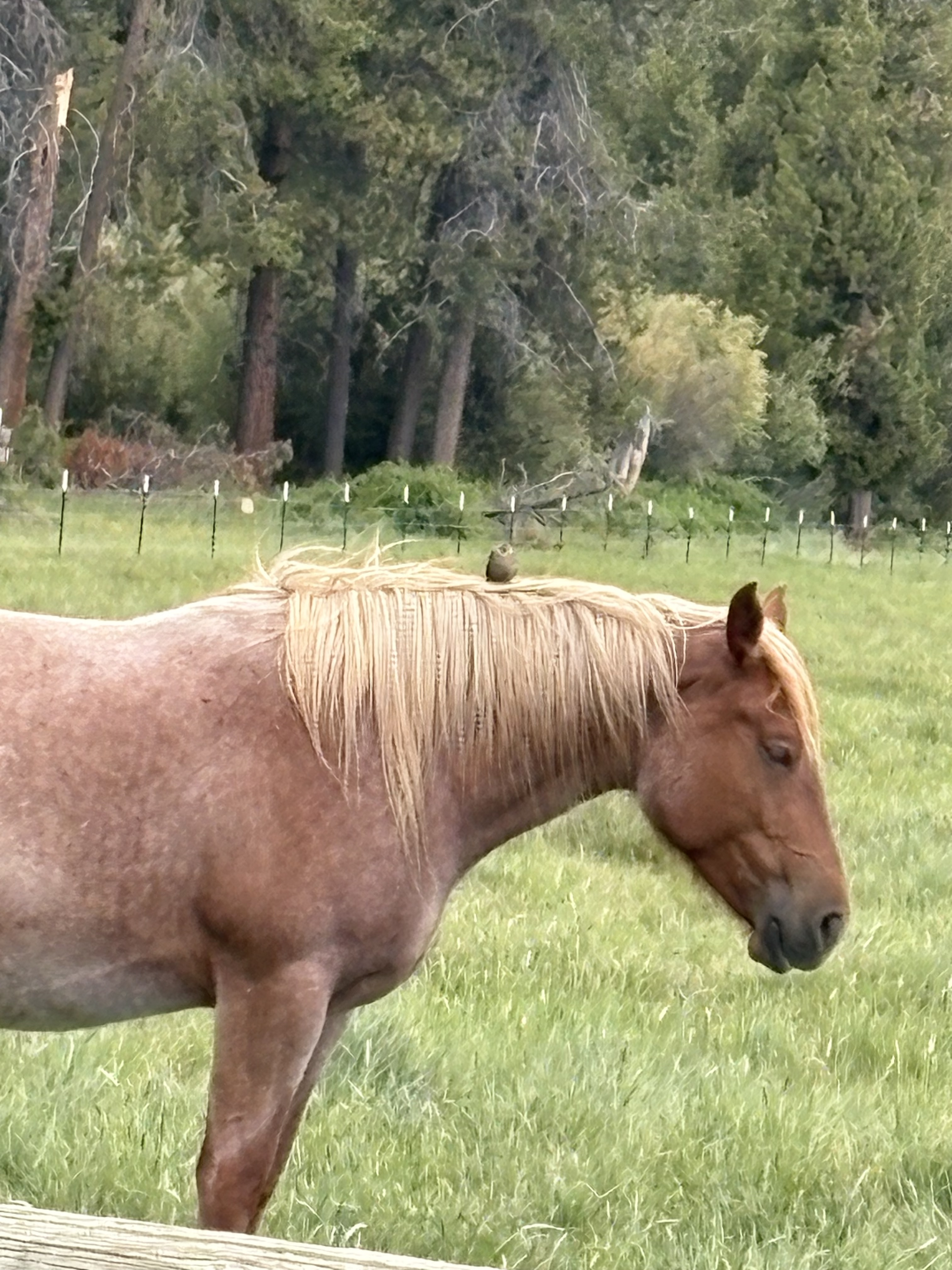
on a cold morning a small bird finds warmth clinging to the neck of a neighbor horse
This Shabbat is Shabbat Nakhamu, the Shabbat of Consolation. No Shabbat of the year cries out for meaningful community more than this one. Which of us can ever feel completely consoled unless we have been seen?
In the book Devarim we will find ourselves reminiscing through Moshe’s words of farewell, remembering tales of the Exodus, days and years of wandering, times of strife and destruction, but also times of exaltation and excitement. Remember the Sinai moment? The Mishkan that we built together, each bringing the gifts of our own hearts?
The act of remembering together, and of pondering the meaning of these events for our lives, gives us a precious treasure that many in our time do not have: a shared history, and an automatic place to belong.
The power of shared community, with agreed-upon (or disputed) norms and customs, is spread over us like a sukkah, like the great Sukkah of Peace that we pray one day to be able to huddle under. In so many ways that we can never appreciate until we need each other, we carry with us a great, mostly undiscovered treasure.
Community like ours means that when you are mourning, your house can be overflowing with people who showed up to support you. When you are celebrating, you’ll have someone to raise a glass (or whatever) with. And when someone else is in need, you’ll know what to do, and how to do it.
The amazing part of Jewish community is its flexibility. Yes, really. Two Jews, three opinions, actually means that we will never all together agree on anything – which gives a lot of room for being Jewish in many different ways.
You can be G*d-intoxicated, or you can be an atheist:
A hasid decided to become an atheist. He sought out the most famous atheist in the town, to learn from him and to be his disciple, hasid-style. The atheist welcomed the hasid into his home for a Shabbat.
Together they went to shul at sundown, came home to make kiddush, washed and shared a Shabbat meal.
After, the atheist handed the hasid a bencher, so that they could sing the blessings after meals together.
The hasid could stand it no longer. “But when do we start denying HaShem?” he said.
“Who?” the atheist asked.
You can be Zionist, or anti-Zionist:
וָאָבִ֤יא אֶתְכֶם֙ אֶל־אֶ֣רֶץ הַכַּרְמֶ֔ל לֶאֱכֹ֥ל פִּרְיָ֖הּ וְטוּבָ֑הּ וַתָּבֹ֙אוּ֙ וַתְּטַמְּא֣וּ אֶת־אַרְצִ֔י וְנַחֲלָתִ֥י שַׂמְתֶּ֖ם לְתוֹעֵבָֽה׃
I brought you to this fertile land to enjoy its fruit and its bounty; but you came and defiled My land, you made My possession abhorrent. (Jeremiah 2.7)
What you cannot be, by definition as a Jew, is alone:
a wise Jew does not live in a community which does not have
a process for ensuring justice
a communal tzedakah fund
a place to pray
bathroom facilities
a doctor
a therapist
a scribe
a grocer
a Torah teacher
a variety of fruits (BT Sanhedrin 17b)
The need to live with others is not conditional nor can one abrogate it. We are all affected by each other, and there is no such thing as a perfect boycott or a perfectly ethical life. There is only us:
There is no one but us.
There is no one to send, nor a clean hand,
or a pure heart on the face of the earth,
nor in the earth,
but only us,
a generation comforting ourselves with the notion
that we have come at an awkward time,
that our innocent ancestors are all dead –
as if innocence had ever been –
and our children busy and troubled,
and we ourselves unfit,
not yet ready,
having each of us chosen wrongly,
made a false start,
failed,
yielded to impulse and the tangled comfort of pleasures,
and grown exhausted,
unable to seek the thread, weak, and involved.
But there is no one but us.
There never has been. – Annie Dillard (excerpt from Holy the Firm)

