
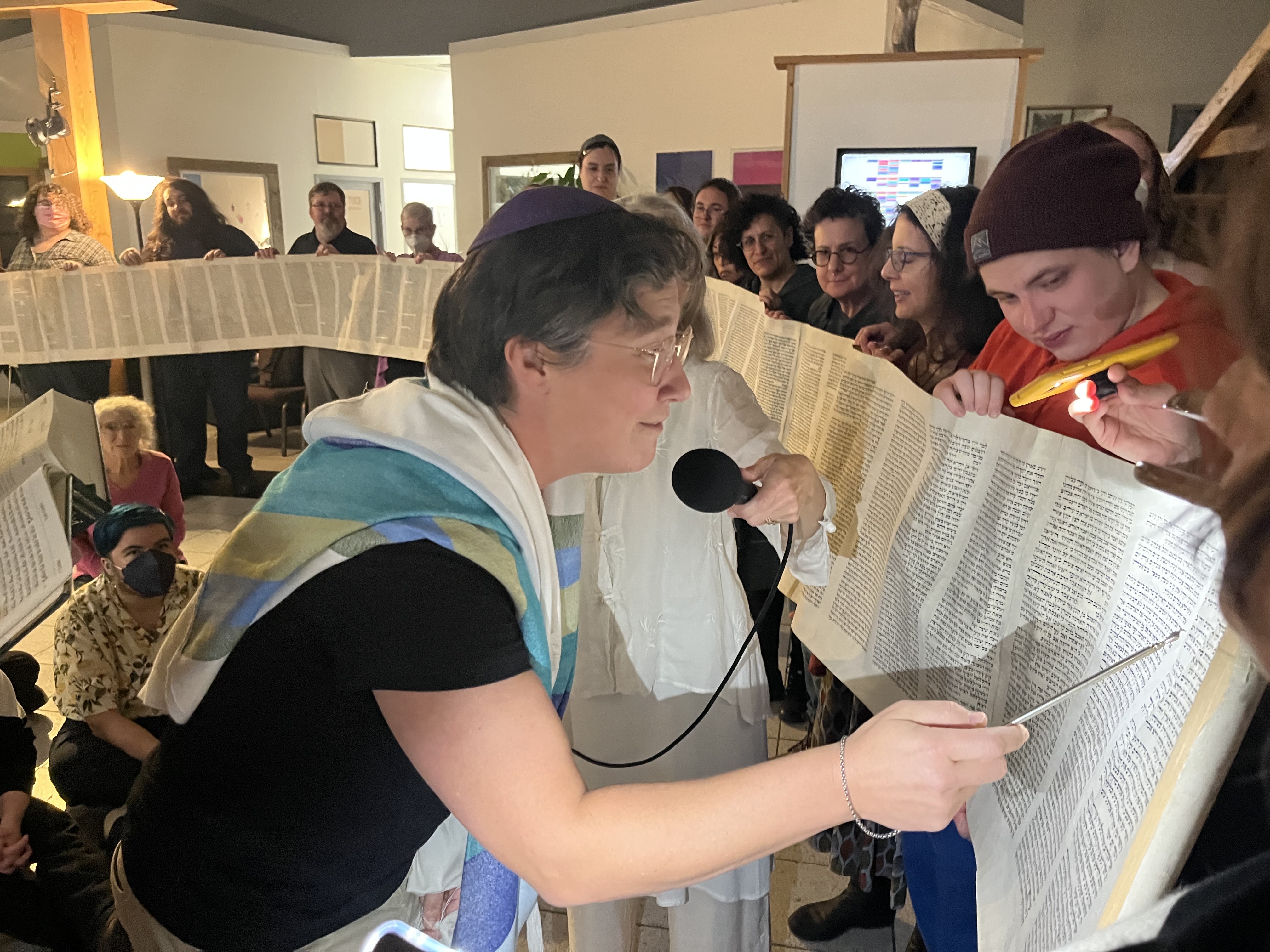
וְלֹ֥א אִתְּכֶ֖ם לְבַדְּכֶ֑ם אָנֹכִ֗י כֹּרֵת֙ אֶת־הַבְּרִ֣ית הַזֹּ֔את וְאֶת־הָאָלָ֖ה הַזֹּֽאת כִּי֩ אֶת־אֲשֶׁ֨ר יֶשְׁנ֜וֹ פֹּ֗ה עִמָּ֙נוּ֙ עֹמֵ֣ד הַיּ֔וֹם לִפְנֵ֖י ה’ אֱלֹהֵ֑ינוּ וְאֵ֨ת אֲשֶׁ֥ר אֵינֶ֛נּוּ פֹּ֖ה עִמָּ֥נוּ הַיּֽוֹם׃
I make this covenant, with its sanctions, not with you alone, but both with those who are standing here with us this day before our God HaShem and with those who are not with us here this day. (Deut. 29.13-14)
Ask almost any Jew for the basic outlines of Judaism, and even the most estranged will say something about the way belief and belonging is passed down in a long chain of generations and history. Whether it makes you feel safe or put-upon, this sense of connection has been part and parcel of the Jewish people’s sense of self since the Torah, as this week’s parashah makes clear.
How can HaShem make a covenant “with those who are not with us here this day”? If you are not one of those who would rather settle into the security of knowing that you have a place in the Jewish covenant with HaShem, if you are one of those who questions the authenticity of an agreement you are bound by but never had a chance to agree to, you are not alone.
Our ancestors in the Talmud are already asking about the foundations of a covenant that includes, and binds, those who aren’t there. The questions have never really ceased to be asked:
why am I connected to this people that I don’t identify with (a la the novelist Philip Roth)?
why am I assumed to support the Israeli occupation of Palestine just because I’m Jewish (an exasperated leftist activist who called me to complain)?
why do non-Jews expect me to know all about Hanukkah just because I’m Jewish (almost every Jew in December)?
The questions have taken multiple forms over time, depending on the times.
The legal interpretation: a coerced oath is not valid in Jewish law. According to the account of the Sinai revelation, the experience was overwhelming. How is this covenant moment valid? Our ancestors find a legal answer in, of all places, the Megillat Ester:
Rav Acha bar Yaakov said, from here is a strong signal [of coercion] regarding [acceptance of] the Torah. Rava said: Nevertheless, they accepted it again in the days of Achashveirosh, as it is written (Esther 9:27), “The Jews established and accepted”–they established [in the days of Achashveirosh] what they had already accepted [in the days of Moshe]. (BT Shabbat 88a.5)
The mystical interpretation: there is an extra letter נ in the Hebrew word איננו which is translated “is not here” in verse 14 above. This letter נ is the first letter of the word נפש nefesh, “soul”. Because it is not needed to spell the word, and because the Jewish tradition of interpretation holds that there are no spelling mistakes in the Torah, the letter is taken to indicate that the souls of those who are “not here” are hinted at, therefore actually included:
You should know that every soul, from Adam to the end of the world, was formed during the six days of creation, and that all of them were present in the Garden of Eden and at the time of the giving of the Torah, as it is said: With him that standeth here with us this day, and also with him that is not here with us this day (Deut. 29:14) (Midrash Tanhumah, Pekudey 3.4)
These interpretations are constructed from the point of view of the validity of the vow to bind future generations. There is, however, another approach, and it welcomes those who are not so sure they are included, and that they are able to approach the holy along with the rest of us, and be accepted and cherished as an integral part of us:
Rav Ashi said: Even though they themselves were not at Mount Sinai, their guardian angels were present, as it is written: “It is not with you alone that I make this covenant and this oath, but with all who stand here with us today before the Lord our God, and with all who are not here with us today” (Deuteronomy 29:13–14), and this includes converts. (BT Shabbat 146a)
Those who are there and those who are not may define ourselves in many different ways, yet it is worth remembering the Hasidic teaching which points out that both phrases in Hebrew end with the same letters.
– those who are here todayאֶת־אֲשֶׁ֨ר יֶשְׁנ֜וֹ פֹּ֗ה
– those who are not here todayוְאֵ֨ת אֲשֶׁ֥ר אֵינֶ֛נּוּ פֹּ֖ה
Both of these two phrases end with the same four letters, and as the commentary Nifla’ot Hadashot points out, those four letters spell תורה – Torah. We are all bound together, in ways we neither know nor can appreciate, perhaps, and in the end that is Torah. Torah, as our Sages understand it, is nothing more and nothing less than all of what can be learned in the quest to understand this glorious gift of life as a Jew.
As we stand before HaShem this Shabbat, and as we prepare to consider how we find ourselves before Eternity on Rosh HaShanah 5787, know that you belong. Each one of us has a place – kicking and screaming, happy and secure, or still wondering, still wandering, still learning.

