
Look at Them and Remember
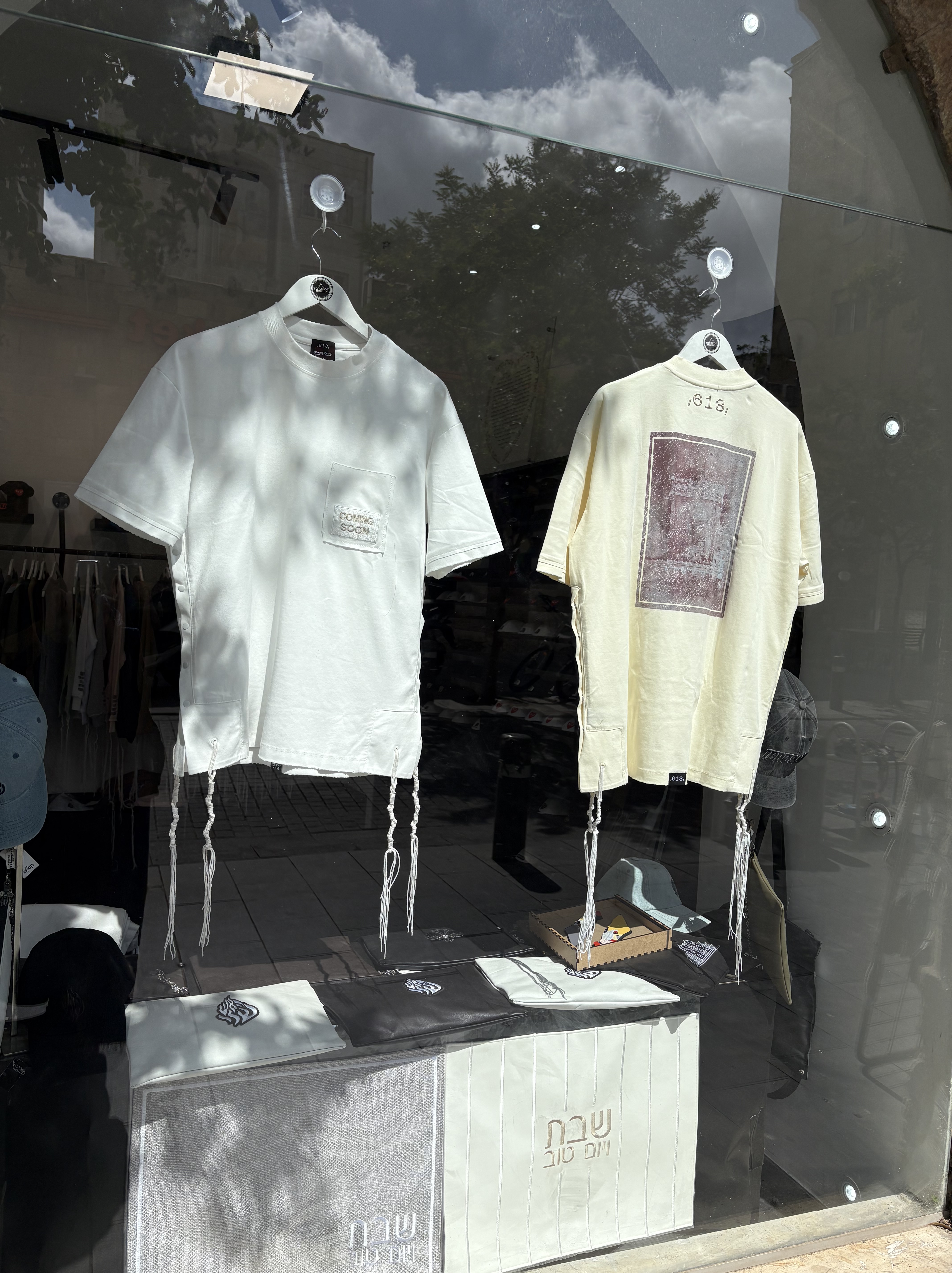
seen in a clothing store window on Ben Yehudah Street in Jerusalem
In this week’s Torah reading, parashat hashavua Shelakh L’kha, we come across a very familiar text to anyone who davens even irregularly:
דַּבֵּ֞ר אֶל־בְּנֵ֤י יִשְׂרָאֵל֙ וְאָמַרְתָּ֣ אֲלֵהֶ֔ם וְעָשׂ֨וּ לָהֶ֥ם צִיצִ֛ת עַל־כַּנְפֵ֥י בִגְדֵיהֶ֖ם לְדֹרֹתָ֑ם וְנָ֥תְנ֛וּ עַל־צִיצִ֥ת הַכָּנָ֖ף פְּתִ֥יל תְּכֵֽלֶת׃
Speak to the Israelite people and instruct them to make for themselves fringes on the corners of their garments throughout the ages; let them attach a cord of blue to the fringe at each corner. (Numbers 15.38)
It is this verse that makes wearing the tzitzit a mitzvah. The mitzvah of what I like to jokingly call Jewish macrame has been fulfilled in different ways at different times and places in our history. Perhaps because it is a visual – something our religious tradition is sorely lacking in due to the command not to worship images – it is a popular object for study. Kids can learn to make them, someone called to the Torah for the first time in the brit mitzvah ritual wears them (attached to the tallit) to mark the change in status, and Jews all over the world use them as religious statements (and perhaps fashion statements, see the photo at the top of this article).
What is the reason for this mitzvah? Is it a hok (not amenable to reason) or a mishpat (morally understandable). The answer – as with all good Jewish answers – is: it depends.
If it is an identity marker for the wearer, then it is a hok, because wearing a fringe in order to identity publicly as a Jew could easily be replaced with a funny hat, as we were mandated to do in medieval Europe, or the yellow star of more recent persecution. The point is to wear it in such a way that others can see it and know that here is an observant Jew. Like a mezuzah, it marks someone or something as Jewish.
Imagine my disgust googling images of tzitzit and finding the first (first!) hit labeled LDS church. And that is the problem with identity markers; they can be stolen, counterfeited, appropriated to mean other things. The flag of the United States is one good example. The significance of other examples causes controversy throughout the political landscape: a tattoo, a frog, a set of three arrows.
The mitzvah of tzitzit, however, has another significance:
וְהָיָ֣ה לָכֶם֮ לְצִיצִת֒ וּרְאִיתֶ֣ם אֹת֗וֹ וּזְכַרְתֶּם֙ אֶת־כׇּל־מִצְוֺ֣ת יְהֹוָ֔ה וַעֲשִׂיתֶ֖ם אֹתָ֑ם וְלֹֽא־תָת֜וּרוּ אַחֲרֵ֤י לְבַבְכֶם֙ וְאַחֲרֵ֣י עֵֽינֵיכֶ֔ם אֲשֶׁר־אַתֶּ֥ם זֹנִ֖ים אַחֲרֵיהֶֽם׃ לְמַ֣עַן תִּזְכְּר֔וּ וַעֲשִׂיתֶ֖ם אֶת־כׇּל־מִצְוֺתָ֑י וִהְיִיתֶ֥ם קְדֹשִׁ֖ים לֵאלֹֽהֵיכֶֽם׃
That shall be your fringe [literally, tzitzit]; look at it and recall all GOD’s commandments and observe them, so that you do not follow your heart and eyes in your urge to stray. Thus you shall be reminded to observe all My commandments and to be holy to your God. (Numbers 15.39-40)
This is not a hok, nor some random macrame; this is meant as a regular reminder, similar to a rubber band around one’s wrist or a statement taped to the bathroom mirror. It cannot be counterfeited nor stolen, nor faked in any way, because, like all images, it is merely a referent to something beyond it. That something is the Jewish ethic to treat others as we would wish to be treated. When “religious” Israeli settlers rampage through Palestinian villages, setting cars and houses on fire, beating people, stealing sheep and destroying olive trees, the tzitziyot that are part of the Jewish “uniform” they’ve adopted is a terrible heresy, much worse than the silly Western Christians whose own religious traditions are so lacking in meaningful symbols that they seek to adopt ours.
The mitzvah of tzitzit is this: when you look at it is supposed to remind you of the mitzvot that you as a Jew are bound to remember, guard, and do. Ideally, all Jews wear the tzitzit all the time and are constantly reminded to do the right thing. Our ancestors began to hide theirs under their clothing to elude tormentors; bringing them out again is a statement of Jewish pride. But unless the wearer takes pride in actually following all those other mitzvot that this one is meant to evoke, we have not yet managed to fulfill the mandate to be holy: to do justice by intervening in injustice where we find it, to love mercy by acting kindly with the strangers we encounter, and walking humbly in the Jewish path, which means not to worry about whether anyone notices or thanks you, but to remain grateful for your one incredible chance to participate in the life of the world we are gifted.
We are only human; we require reminders. If it’s not a tzitzit, what do you use?

